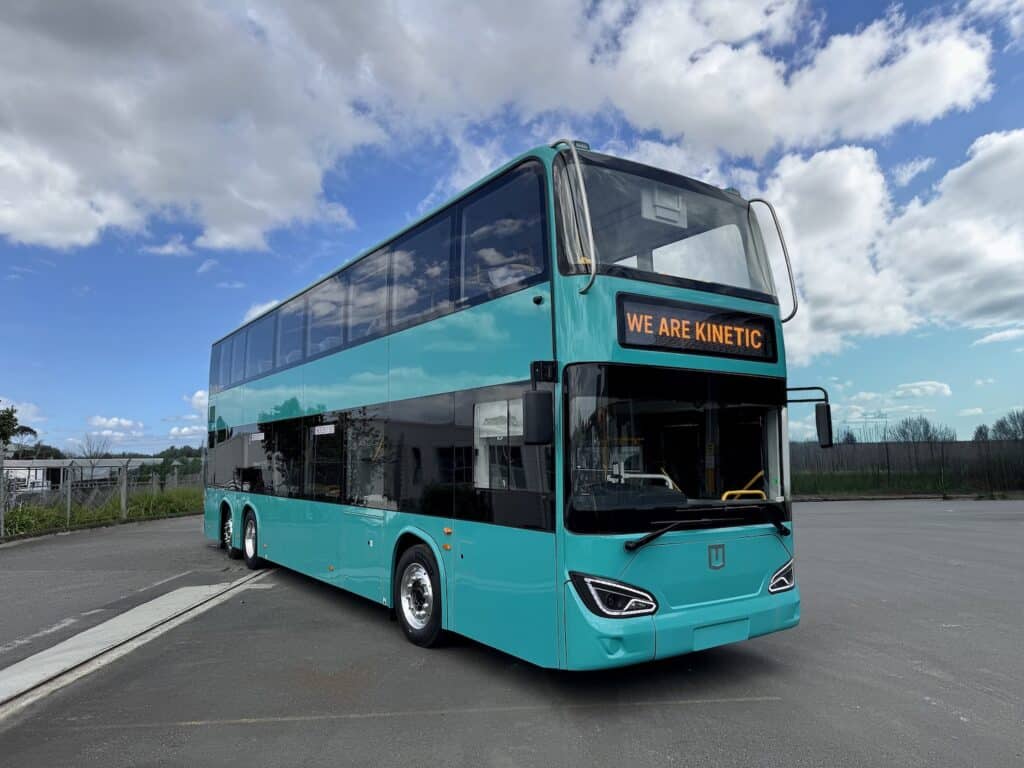
Kinetic New Zealand and Geely developed a lightweight electric double-decker bus that complies with New Zealand weight rules without requiring a special permit. The bus will enter trial service with Environment Canterbury, allowing high-capacity zero-emission urban routes to operate within existing regulations. The vehicle uses aerospace-grade aluminium technology similar to the Airbus A380 to create a stronger, lighter frame that reduces road wear, tyre and brake use, and energy consumption. The program included 18 months of development, four prototypes and about US$6 million in R&D, and the bus features CATL BC5 Generation II LiFePO4 batteries with a 15-year life guarantee and a smart charging system enabling simultaneous fast-charging through multiple ports.
"Kinetic New Zealand has unveiled the country's first lightweight electric double-decker bus designed to meet weight compliance without requiring a special permit. Developed through a partnership between Kinetic and global automotive group Geely, the electric double-decker represents a New Zealand first in addressing regulatory mass limits that have previously constrained the deployment of high-capacity electric buses. The vehicle will enter trial service with Environment Canterbury, becoming the first electric double-decker in the country able to operate within existing weight rules without exemptions."
"The bus draws on research, development and safety standards from Volvo Cars, part of the Geely group, combining global electric vehicle engineering with local operational requirements. Kinetic states that the bus is "built using aerospace-grade aluminium technology, similar to that used in the Airbus A380, and delivers a stronger and lighter frame than traditional steel construction. It reduces road wear, tyre and brake use, and energy consumption, improving operational efficiency"."
"The project followed an 18-month development and testing program involving four prototypes and around US$6 million in R&D investment. The resulting vehicle has been engineered specifically for New Zealand conditions, with passenger services expected to begin on selected Canterbury Metro routes early next year."
#electric-double-decker #lightweight-aluminium-chassis #zero-emission-public-transport #battery-charging-technology #new-zealand-transit
Read at Sustainable Bus
Unable to calculate read time
Collection
[
|
...
]