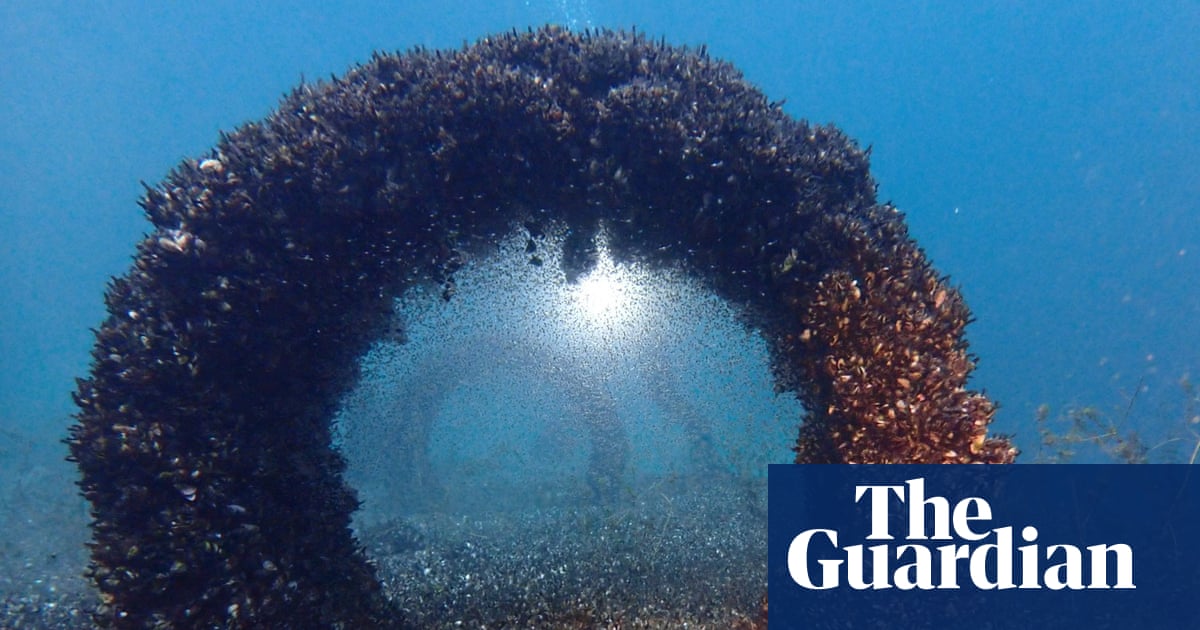
Quagga mussels invaded about 5km of pipes beneath the Swiss Federal Technology Institute of Lausanne (EPFL) within a couple of years. The infestation reduced the power of some heat exchangers by a third and clogged systems with ground-up shells. Air conditioning faltered, causing summer indoor temperatures to reach 26–27C instead of below 24C. Cooling pipes draw cold water from 75 metres in Lake Geneva and supply datacentres, long-running experiments, and Tokamak, an experimental fusion facility that requires strict temperature control. One female quagga can produce up to a million egg cells, they can spawn at 5C, and some live up to 30 years. The infestation was first detected in Lake Geneva six years earlier and the full extent at EPFL was discovered in 2022.
"Like cholesterol clogging up an artery, it took just a couple of years for the quagga mussels to infiltrate the 5km (3-mile) highway of pipes under the Swiss Federal Technology Institute of Lausanne (EPFL). By the time anyone realised what was going on, it was too late. The power of some heat exchangers had dropped by a third, blocked with ground-up shells. The air conditioning faltered, and buildings that should have been less than 24C in the summer heat couldn't get below 26 to 27C."
"The invasive mollusc had infiltrated pipes that suck cold water from a depth of 75 metres (250ft) in Lake Geneva to cool buildings. It's an open invasion, says Mathurin Dupanier, utilities operations manager at EPFL. But the damage went far beyond keeping classrooms cool. The university's datacentres need to be chilled, and long-running experiments cannot tolerate temperature fluctuations. Research is one of the things we do; if it stops, then the school closes, says Dupanier."
"Quagga mussels are among the planet's most potent invasive species. They reproduce at astonishing speed: one female quagga produces up to a million egg cells. Some are known to survive for 30 years in the deepest parts of American lakes. They can breed all year round, and spawn in temperatures as low as 5C. Dupanier's team were shocked when they discovered the extent of the invasion in 2022. We had this denial about what was happening, he says."
Read at www.theguardian.com
Unable to calculate read time
Collection
[
|
...
]