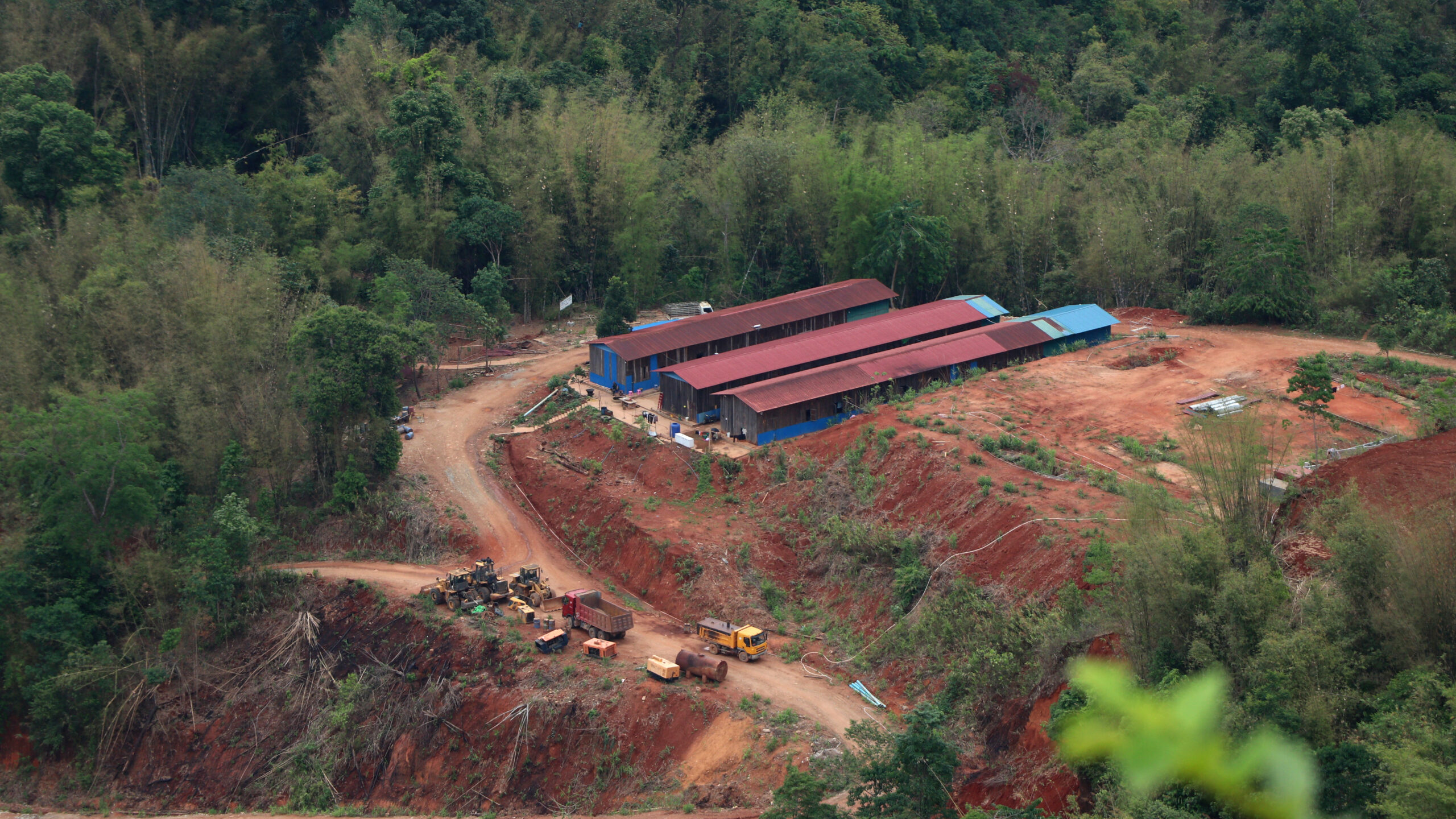
In early 2025 a job seeker named Sian traveled into Shan State to work at new rare-earth mining sites run in territory administered by the United Wa State Army. Chinese companies recruit workers at those sites offering higher pay amid economic collapse. Workers dig boreholes and install pipes for in situ leaching, injecting acidic solutions into mountainsides and collecting drained solution in plastic-lined pools where heavy rare-earth metals settle. Sediment sludge is transported to furnaces and burned to produce dry rare earth oxides. Thousands of laborers are flocking to eastern border mine sites, causing poisoned rivers, contaminated soil, sickness, and displacement. China holds most of the world's rare-earth processing facilities.
"I n early 2025, Sian traveled deep into the mountains of Shan State, on Myanmar's eastern border with China, in search of work. He had heard from a friend that Chinese companies were recruiting at new rare-earth mining sites in territory administered by the United Wa State Army, Myanmar's most powerful ethnic armed group, and that workers could earn upwards of $1,400 a month."
"Hired for daily wages of approximately $21, he now digs boreholes and installs pipes. It is the first step in a process called in situleaching, which involves injecting acidic solutions into mountainsides, then collecting the drained solution in plastic-lined pools where solids, like dysprosium and terbium, two of the world's most sought-after heavy rare-earth metals, settle out. The resulting sediment sludge is then transported to furnaces and burned, producing dry rare earth oxides."
Read at Ars Technica
Unable to calculate read time
Collection
[
|
...
]