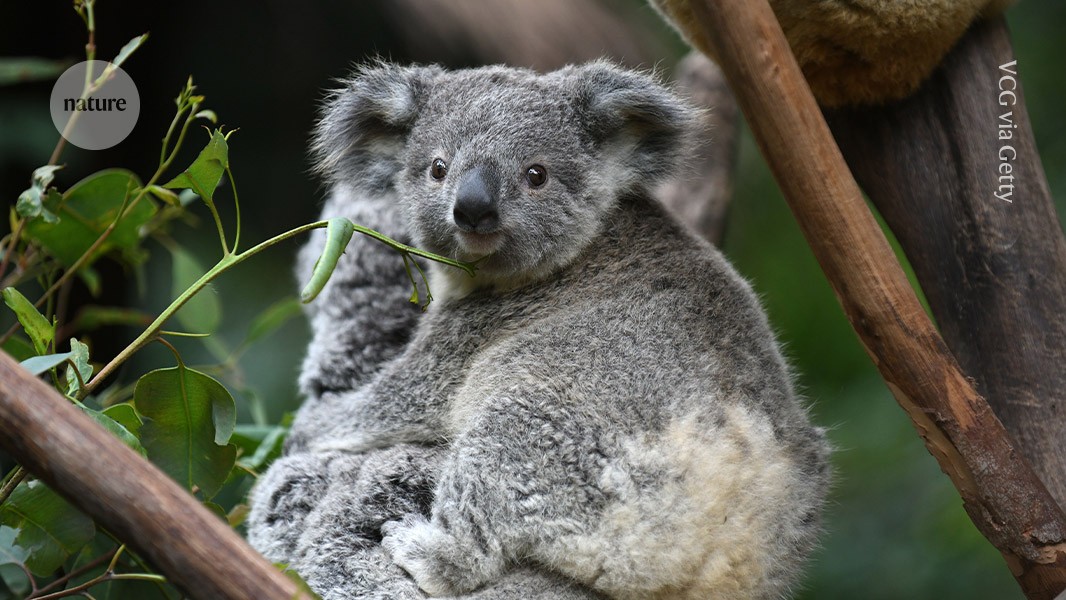
"In conservation genetics, we think the population with a high genetic diversity is healthier. But in their study, published in Science today, Ahrens and his colleagues find that koalas in Victoria are doing better than expected when taking into account their effective population size - the number of individuals that breed and contribute to the next generation's gene pool."
"Once genetic diversity is reduced significantly, says study co-author Collin Ahrens, it's rare to see it recover. The team found that the effective population of koalas in Victoria has jumped substantially in the past few decades, despite previously collapsing by more than 90%."
"The study provides a road map for how to integrate genetic and evolutionary knowledge into conservation planning. This should help managers to identify populations at genetic risk of extinction and take steps to reverse that."
Koala populations in Victoria, Australia, were decimated in the late nineteenth and early twentieth centuries for their fur, reducing numbers to 500-1,000 individuals by the 1920s. This severe population collapse created a genetic bottleneck, reducing genetic diversity and limiting the species' ability to adapt to disease and environmental change. Recent research reveals that Victorian koalas have unexpectedly recovered genetic diversity over recent decades, with their effective population size increasing substantially despite the historical 90% collapse. This recovery demonstrates that genetic diversity can be regained in species pushed to extinction's brink, challenging conventional conservation genetics assumptions. The findings provide a framework for integrating genetic and evolutionary knowledge into conservation planning, helping managers identify populations at genetic risk and implement recovery strategies.
#koala-conservation #genetic-diversity-recovery #population-bottleneck #wildlife-restoration #conservation-genetics
Read at Nature
Unable to calculate read time
Collection
[
|
...
]