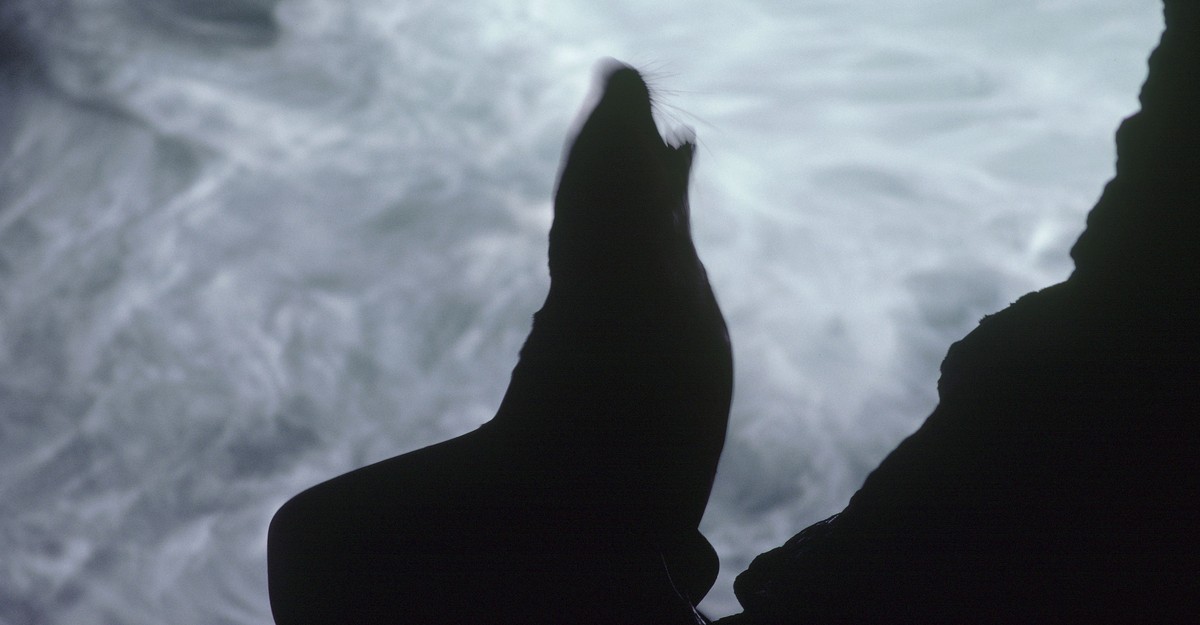
Numerous nonlethal deterrents have repeatedly failed to prevent sea lions from consuming Columbia River salmon. Authorities used boats, rubber bullets, explosives, uncomfortable dock devices, electrified mats, flailing tube men, motion-activated sprinklers, and an orca replica, yet sea lions often return within hours or weeks. Dams concentrate salmon in tight spaces, creating easy hunting grounds where sea lions have consumed nearly half of some spring Chinook runs. State and tribal managers have escalated to trapping and euthanizing animals; since 2020 more than 200 sea lions have been killed, still below federal limits, while predation continues at sites like Bonneville Dam.
"Local officials and researchers have chased sea lions with boats and peppered them with rubber bullets; they've detonated noisy explosives. They've outfitted the docks where the animals like to rest with uncomfortable spinners, electrified mats, flailing tube men, and motion-activated sprinklers. ("Very surprisingly, they don't like to get wet on land," Casey Clark, a marine-mammal biologist at the Washington Department of Fish and Wildlife, told me.) At one point, the Port of Astoria dispatched a 32-foot fiberglass replica of sea lions' primary predator, the orca, outfitted with real orca sounds, that almost immediately capsized. Scientists have captured sea lions and released them thousands of miles away, as far as Southern California. No matter the tactic, the result is largely the same: Within weeks, or sometimes even hours, the sea lions swim right back."
"The waterways of the Columbia River basin, full of dams that corral salmon in tight spaces, are just too easy of a hunting ground for the sea lions to spurn. In especially hard-hit sections of the Columbia River, sea lions have eaten close to half of the spring Chinook run. "That's a devastating amount of fish," Jeremy Cram, the salmon-recovery coordinator at the Washington Department of Fish and Wildlife, told me-both for the region's highly vulnerable fish and for the humans who want to catch and eat them."
"So in recent years, officials made sea-lion removals more permanent, which is to say, more deadly. Since 2020, the states of Washington, Oregon, and Idaho, as well as a handful of local tribes, have trapped and euthanized more than 200 sea lions in and around the Columbia River-and have still fallen short of the limits allowed by federal law. With sea lions still eating thousands of salmon each spring at sites such as the Bonneville Dam, near Por"
Read at The Atlantic
Unable to calculate read time
Collection
[
|
...
]