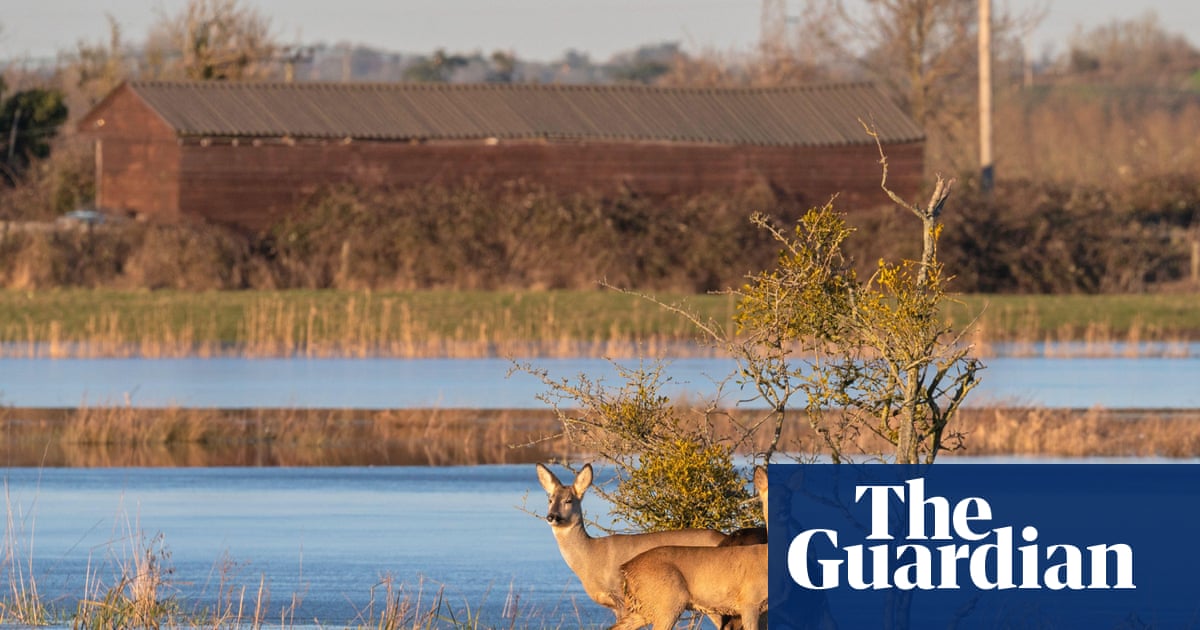
"Huge flocks of gulls are gathering in the flooded fields to feed, with scarcer Mediterranean and little gulls joining the regular black-headed, herring and common varieties. These have attracted a white-tailed eagle from the Isle of Wight reintroduction project, although it does not appear to have caught any victims yet. Lapwings are more visible than usual, as high depths of water on some of the nature reserves mean they are unable to feed, so must move off into shallower areas to do so."
"But spare a thought for the local barn owls. They usually hunt over damp, grassy fields, especially less intensively farmed areas with longer vegetation and plenty of voles. Now the fields are too wet for the rodents and because barn owls' soft feathers are not waterproof, they are unable to hunt in the rain and find it difficult to stay warm."
Extensive winter rainfall has flooded the Somerset Levels, leaving fields and moors overflowing. Huge flocks of gulls are feeding in flooded fields, including scarcer Mediterranean and little gulls alongside black-headed, herring and common gulls. A white-tailed eagle from the Isle of Wight reintroduction project has been attracted to the area. Lapwings are displaced into shallower areas because high water depths on reserves prevent feeding. Barn owls are particularly affected: wet fields reduce vole populations, their soft feathers are not waterproof, they cannot hunt in rain and struggle to stay warm. Receding waters will reveal which species survived, but more frequent severe weather threatens bird populations.
Read at www.theguardian.com
Unable to calculate read time
Collection
[
|
...
]