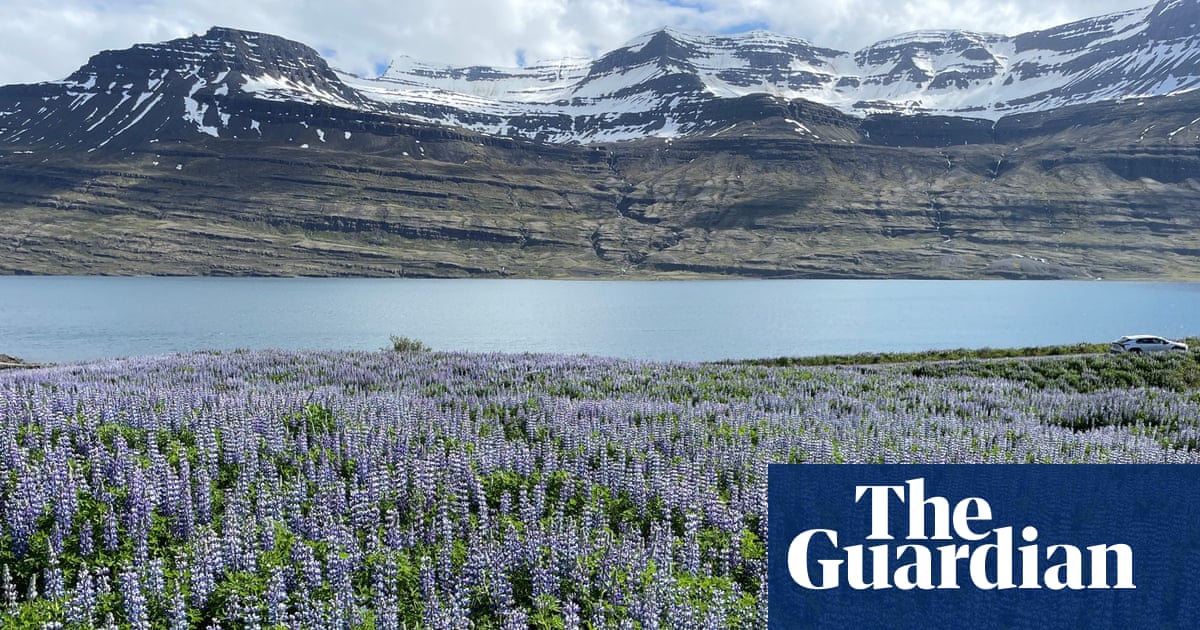
Nootka lupin, native to Alaska, was introduced to Iceland in the 1940s to stabilise dark volcanic soils and fix nitrogen, aiming to reduce severe erosion and enable forest recovery. The plant spread across fjords, mountains, lava fields, grasslands and protected areas, producing vast purple blooms each June and July that draw tourists and photographers. The species helps regenerate plant cover and has become an accidental national emblem, but its rapid expansion now divides communities and alarms scientists who warn it threatens native ecosystems. Two-fifths of land remains significantly degraded despite past interventions.
"It was only when huge areas of Iceland started turning purple that authorities realised they had made a mistake. By then, it was too late. The Nootka lupin, native to Alaska, had coated the sides of fjords, sent tendrils across mountain tops and covered lava fields, grasslands and protected areas. Since it arrived in the 1940s, it has become an accidental national symbol. Hordes of tourists and local people pose for photos in the ever-expanding fields in June and July, entranced by the delicate cones of flowers that cover the north Atlantic island."
"The lupins were first introduced in an attempt to hold the country's dark volcanic soils together. A huge amount of soil was being driven into the Atlantic by ferocious winds and rain each year a problem that endures today, with two-fifths of land now classified as significantly degraded. The purple-blue blooms were the brainchild of Hakon Bjarnason, Iceland's chief forester at the end of the second world war, who had seen them on a trip to Alaska."
Read at www.theguardian.com
Unable to calculate read time
Collection
[
|
...
]