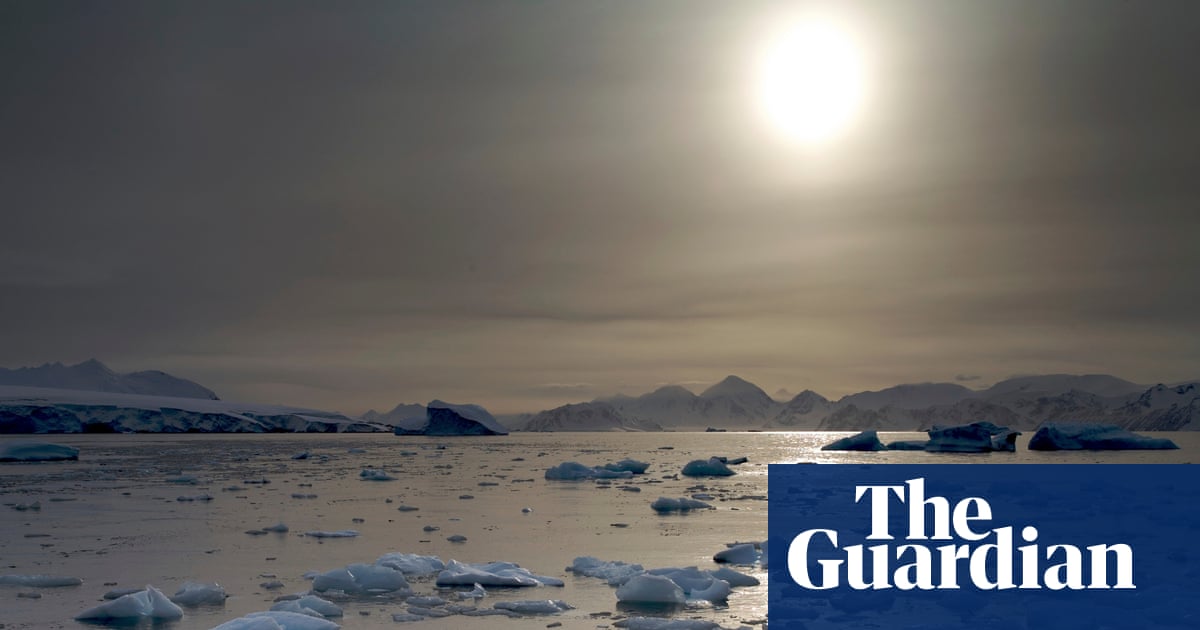
"The yearly gap in what scientists have called planetary sunscreen reached a maximum area of 21m sq km (8.1m sq miles) over the southern hemisphere in September well below the maximum of 26m sq km reached in 2023 and shrank in size until coming to an early close on Monday, data from the Copernicus Atmosphere Monitoring Service (Cams) shows."
"However, since ozone-depleting chemicals were phased out by the 1987 Montreal protocol and a series of amendments that followed, it has begun to recover. A study in Nature Climate Change last year found the actions had successfully curbed emissions, and led to the heating effects of the gases peaking five years earlier than expected. The World Meteorological Organization estimates that the ban will enable a recovery of the ozone layer over the Antarctic, where it is thinnest, to 1980 levels by 2066."
The Antarctic ozone hole reached a maximum area of 21m sq km (8.1m sq miles) in September and closed early this year, making it the smallest and shortest-lived since 2019. Copernicus Atmosphere Monitoring Service data shows the hole was smaller than 2023's 26m sq km and that sizes have declined for two consecutive years after larger holes from 2020–2023. The recovery reflects reductions in ozone-depleting substances following the 1987 Montreal protocol and amendments. A Nature Climate Change study found emissions curbing led to earlier peak heating effects. Scientists suspect the 2022 Hunga Tonga eruption contributed to the large 2023 ozone hole; recovery to 1980 Antarctic levels is projected by 2066.
Read at www.theguardian.com
Unable to calculate read time
Collection
[
|
...
]