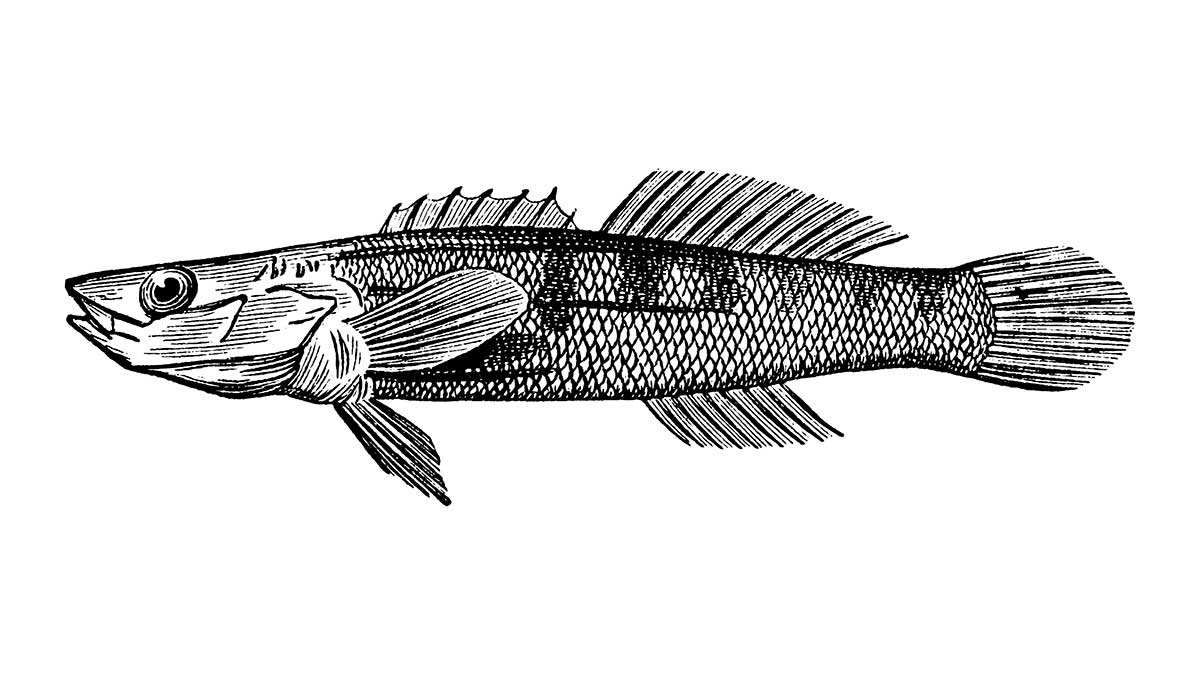
Three small darters in Valley Creek near Birmingham, Alabama—Birmingham darter, watercress darter, and blackbanded darter—are bottom-dwelling fish with large pectoral fins for perching among gravel and flow. Genomic analysis in April 2025 confirmed the Birmingham darter is a distinct species found nowhere else on Earth. Unlike relatives, it avoids the main channel and instead lives in small tributaries and headwater streams that are highly vulnerable to drying, warming, and disturbance. Only a handful of populations are known within about a 65-square-mile watershed, with some populations feared extirpated. Valley Creek also contains endangered mussels that depend on darters for reproduction. Mussels release mucus lures that mimic small fish; when darters strike, larvae attach to gills and develop. Without darters, larvae die quickly, and without mussels, water filtration, nutrient cycling, and ecosystem stability decline.
"For years, they were thought to be variations of the same species. In April 2025, genomic analysis confirmed something more fragile and more important: the Birmingham darter is its own species, found nowhere else on Earth. Unlike its relatives, it does not occupy the main channel. It lives in small tributaries and headwater streams-the very places most vulnerable to drying, warming, and disturbance."
"Only a handful of populations are currently known, confined to the upper Valley Creek watershed and a few adjacent tributaries-a drainage area of roughly 65 square miles. Recent surveys have extended the known range into Little Blue Creek, Nabors Branch, and Halls Creek, but at least one population is feared extirpated. It is extremely difficult to count, but all evidence suggests a species on the brink."
"They release mucus or fleshy lures into the current that mimics a small fish, complete with an eyespot. When a darter strikes, it gets a mouthful of microscopic larvae. These larvae clamp onto the fish's gills-like tiny Pac-Men-where they remain attached as they develop. This relationship is obligate. Without the host fish, the larvae die within days. Without mussels, Valley Creek loses vital natural processes, water filtration, nutrient cycling, and ecosystem stability."
Read at Earth911
Unable to calculate read time
Collection
[
|
...
]