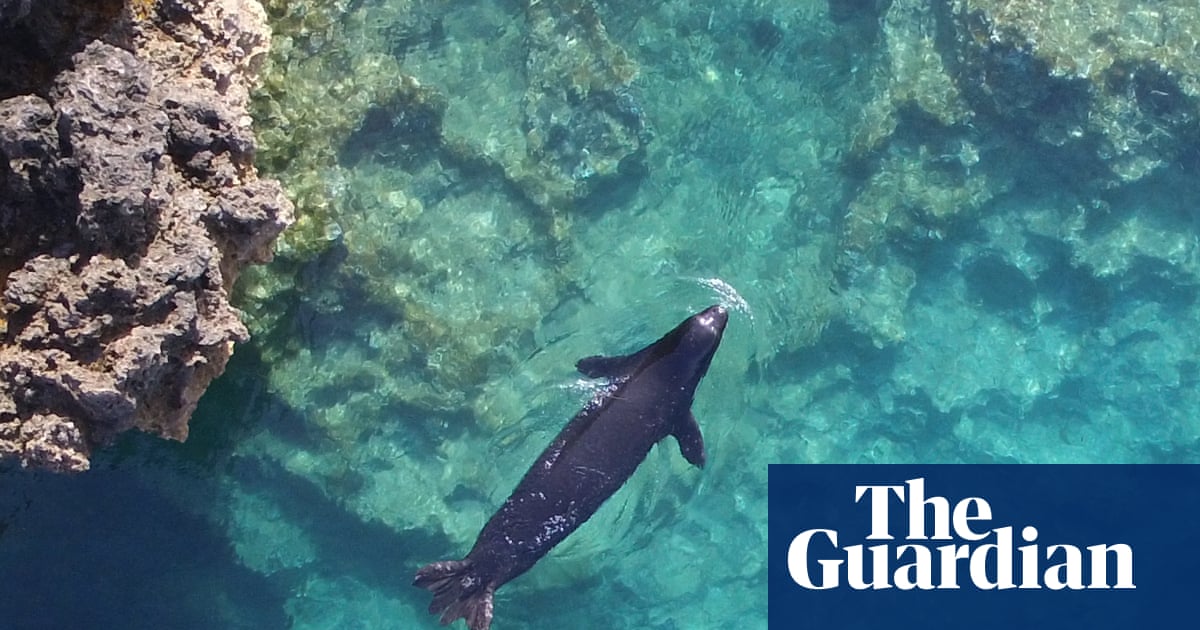
"It's a huge Mediterranean monk seal, one of the world's rarest marine mammals , which at up to 2.8 metres and over 300kg (660lbs), is also one of the world's largest types of seal. Piperi, where the seal has come ashore, is a strictly guarded island in the National Marine Park of Alonissos and Northern Sporades, Greece's largest marine protected area (MPA) and a critical breeding habitat for the seals."
"With a global population of under 1,000 individuals, Monachus monachus is listed as vulnerable on the IUCN Red List, reclassified from endangered in 2023, after decades of conservation efforts helped raise numbers. According to the Hellenic Society for Protection of the Monk Seal (MOm), Greece is home to about 500 monk seals (up from 250 in the 1990s), half of the global population, so has a uniquely important role to play in the future of these rare mammals."
"Monk seals have been hunted in the Mediterranean since prehistoric times for their pelts, meat and blubber. While this threat has receded in Greece, others entanglement in fishing gear, food depletion, pollution and habitat loss have not. Now, according to conservationists, a very modern peril is growing exponentially and putting that fragile recovery at risk: Greece's burgeoning marine leisure industry. Unregulated tourism is having a negative impact on a mammal that is sensitive to human disturbance, say ."
Massive Mediterranean monk seals, reaching 2.8 metres and over 300 kg, use secluded caves and the Piperi islet in the National Marine Park of Alonissos and Northern Sporades as critical breeding habitat. Access to Piperi is tightly restricted to researchers within three miles with government permission. Global population is under 1,000; the species was reclassified from endangered to vulnerable in 2023 after decades of conservation. Greece hosts about 500 individuals, roughly half the world total, rising from about 250 in the 1990s. Historical hunting has declined, but ongoing threats include fishing entanglement, food depletion, pollution, habitat loss and increasing disturbance from unregulated marine tourism.
Read at www.theguardian.com
Unable to calculate read time
Collection
[
|
...
]