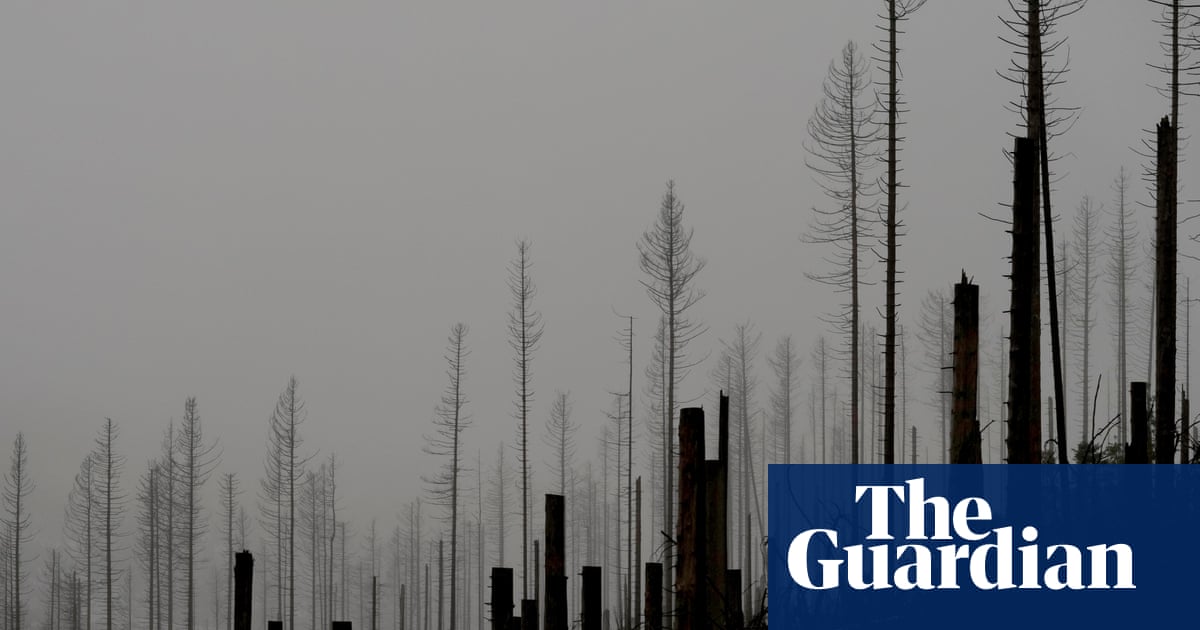
"Even the intense green of late spring cannot mask the dead trees in the Harz mountains. Standing upright across the gentle peaks in northern Germany, thousands of skeletal trunks mark the remnants of a once great spruce forest. Since 2018, the region has been ravaged by a tree-killing bark beetle outbreak, made possible by successive droughts and heatwaves. It has transformed a landscape known for its verdant beauty into one dominated by a sickly grey."
"The loss has sparked a reckoning with the modern forestry methods pioneered by Germany that often rely on expanses of monoculture plantations. The ferocity of the beetle outbreak means there is no going back to the old way of doing things: replacing the dead spruce with saplings from the same species would probably guarantee catastrophe once again. Instead, foresters have been experimenting with a different approach:"
"There have been times where we did not have any confidence in what we were doing, says Mathias Amann, a spokesperson for the regional forestry company responsible for this part of the range, pointing out the scars in the landscape from the top of a hill. You spend the whole day cutting down infected trees. The next day, too, and the next. For months. The whole year: cutting, cutting, cutting. A lot of colleagues have burnout symptoms, he says."
Since 2018 a bark beetle outbreak, enabled by successive droughts and heatwaves, has killed thousands of spruce trees across the Harz mountains, transforming green peaks into grey stands of skeletal trunks. The dieback exposed the vulnerability of monoculture spruce plantations and made replanting the same species a risky recovery strategy. Foresters are planting mixed pockets of beech, fir and sycamore around surviving spruce to increase biodiversity and resilience. Continuous removal of infected trees has caused prolonged labor and burnout among forestry workers. The rapid tree loss is prompting reevaluation of forestry practices and forests' roles in climate goals.
Read at www.theguardian.com
Unable to calculate read time
Collection
[
|
...
]