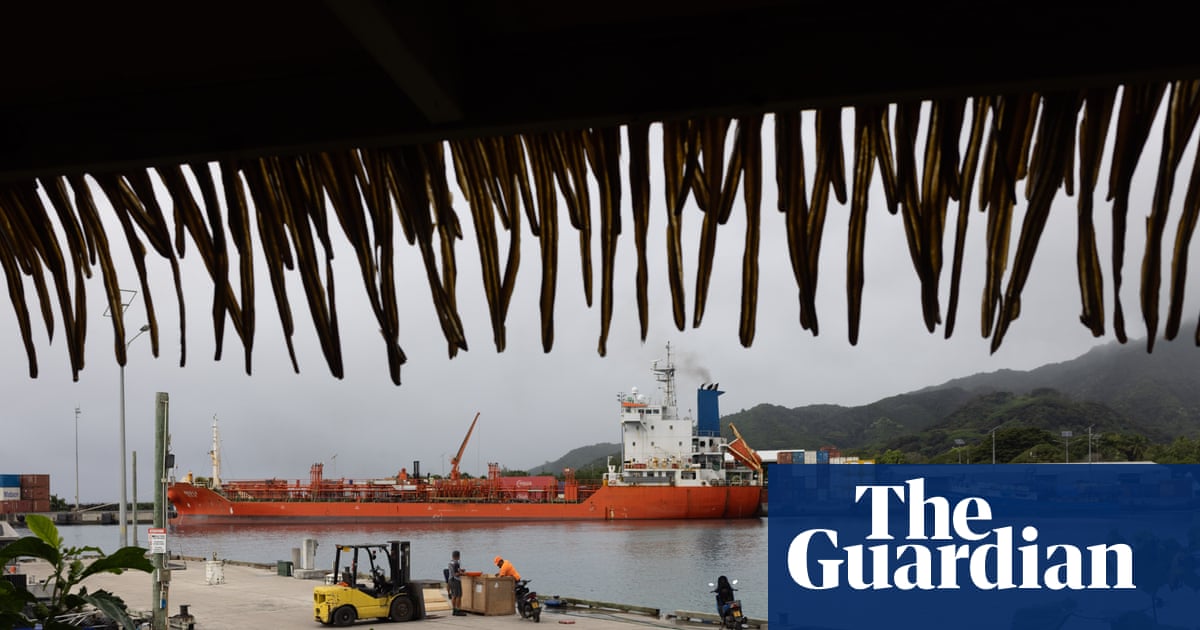
A fuel shortage in Fiji showed unusually fast pump numbers and reduced ability to fill tanks, reflecting higher costs and limited supply. The Pacific region faces climate risks, and the fuel crisis linked to the US-Israel war on Iran adds a fossil-fuel vulnerability. Reliance on imported oil is expected to slow economic growth and raise inflation across countries and territories. Higher fuel prices are already affecting everyday expenses such as cassava prices and school transportation costs, and they are pressuring business profits. The impact is amplified by remoteness and small populations, alongside high oil use in energy systems. Oil provided over 80% of the region’s energy supply in 2023, with major shares for transport and electricity, and many countries generate most electricity from oil products.
"When 53-year-old Agbar Mohammad pulled into a petrol station in Fiji in May, he was expecting a queue. Instead, it was almost empty. I could only see one or two cars at the service station, which was very unusual, Mohammad says. The reason became clear very quickly: as Mohammad filled his car, the numbers on the fuel pump climbed so much faster than the needle on his dashboard. Normally he would put in about $40 of fuel, but this time $100 barely got his 60-litre tank halfway full."
"The Pacific region is already at the forefront of the climate crisis thanks to rising sea levels and increasing natural disasters. But the fuel crisis caused by the US-Israel war on Iran is revealing another fossil-fuel based vulnerability. The reliance of countries and territories in the Pacific on imported oil is expected to hit economic growth and increase inflation. The shortages are already showing up in the price of cassava, the cost of the school run, and in businesses' bottom lines."
"Dr Rubayat Chowdhury from the Australian National University says Pacific Islands are very dependent on imports for food and basic necessities. And in a region that earns a lot from tourism, remittances and foreign aid, higher fuel prices will not just push up the cost of goods, but could also threaten incomes. The Pacific will be hit hard, says Chowdhury, for two main reasons. The first is its remoteness. And the second is small populations."
"Oil accounted for more than 80% of the region's energy supply in 2023 — more than half of that for transport, and more than a third for electricity. At least eight Pacific countries generated more than half of their electricity in 2024 from oil products — over 90% in Solomon Islands and more than 80% in Tonga and Nauru. By comparison Australia and New Zealand derived 2.3% and 1.5% of their electricity from oil products in 2024."
#fuel-shortages #imported-oil-dependence #inflation-and-economic-impact #energy-supply-and-electricity-generation #pacific-islands
Read at www.theguardian.com
Unable to calculate read time
Collection
[
|
...
]