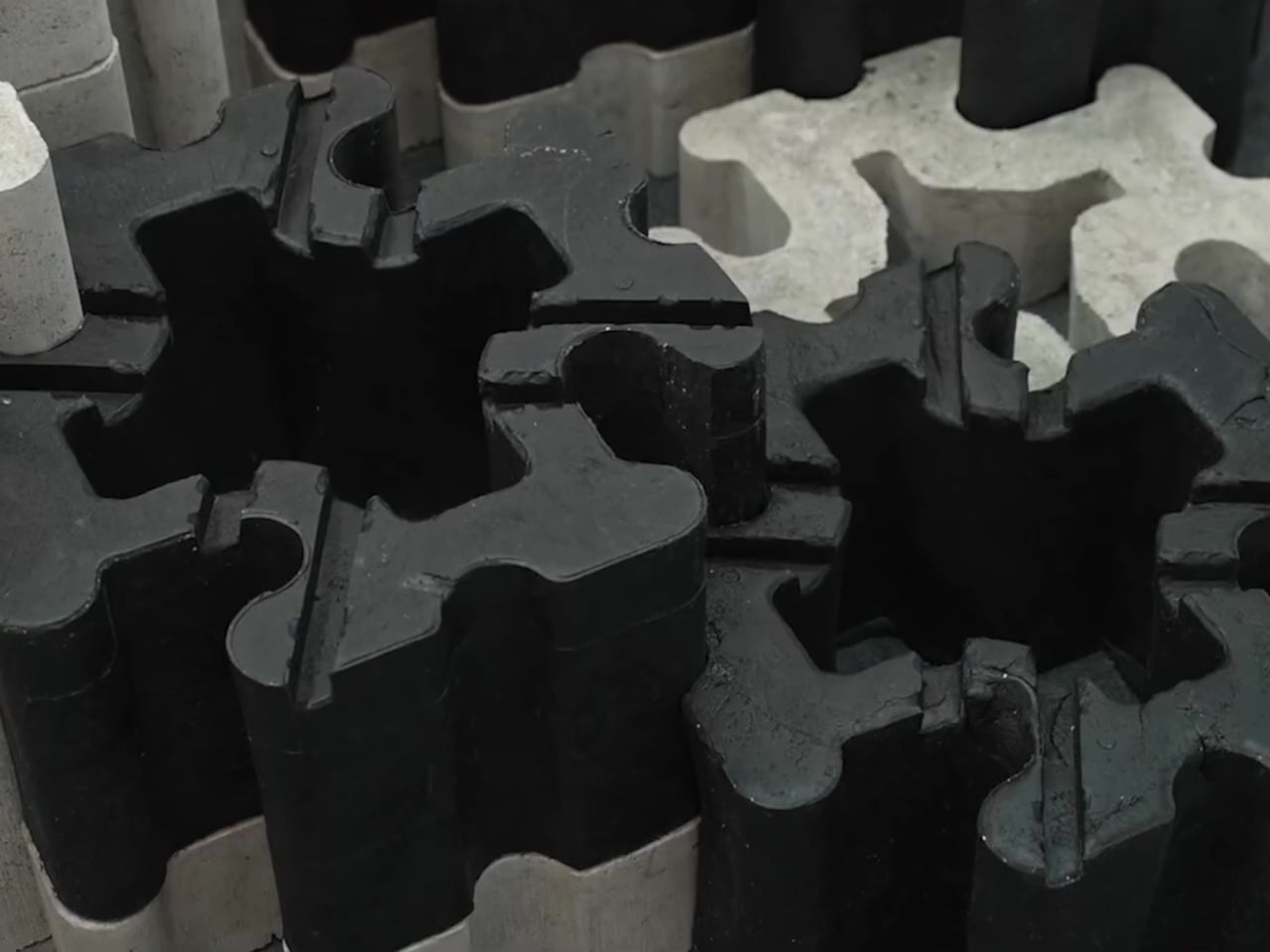
"Eco-C CUBE treats those two problems as one solution. Developed by WES-Tec Global and the Korea Low Impact Development Association, it turns hard-to-recycle mixed plastic waste into a structural block for civil infrastructure. The New-Cycling process melts fishing nets, buoys, and film waste at low temperature without sorting or washing, then extrudes the material directly into three-dimensional interlocking blocks designed to hold back hillsides, stabilize slopes, and form solar panel bases."
"Picture a discarded fishing net or multilayer wrapper that normally has no second life. Instead of being shredded, washed, and downgraded into pellets, it goes straight into a controlled low-temperature extruder that preserves the polymer structure. What comes out is a dense, high-strength block with better tensile and compressive performance than concrete, which is what you want in a retaining wall trying to hold back a hillside after heavy rain or freeze-thaw cycles."
"The three-dimensional interlocking design lets crews stack the blocks into buttress-style or box-style retaining walls without cement or adhesives. Gravity and geometry keep everything stable, which means faster installation, easier disassembly if something needs repair, and built-in drainage through hollow channels so water does not accumulate pressure behind the wall. That drainage feature also makes the blocks compatible with low-impact development strategies that manage stormwater on site."
Eco-C CUBE converts hard-to-recycle mixed plastic waste—fishing nets, buoys, and multilayer films—into three-dimensional interlocking structural blocks without sorting or washing. The New-Cycling process melts the waste at low temperature and extrudes dense blocks that preserve polymer structure and yield higher tensile and compressive performance than concrete. The blocks stack into buttress- or box-style retaining walls and solar panel bases without cement or adhesives, relying on gravity and geometry for stability. Hollow channels provide built-in drainage to prevent hydrostatic pressure and support on-site stormwater management. Each kilogram of Eco-C CUBE reduces about 2.99 g of CO₂.
Read at Yanko Design - Modern Industrial Design News
Unable to calculate read time
Collection
[
|
...
]