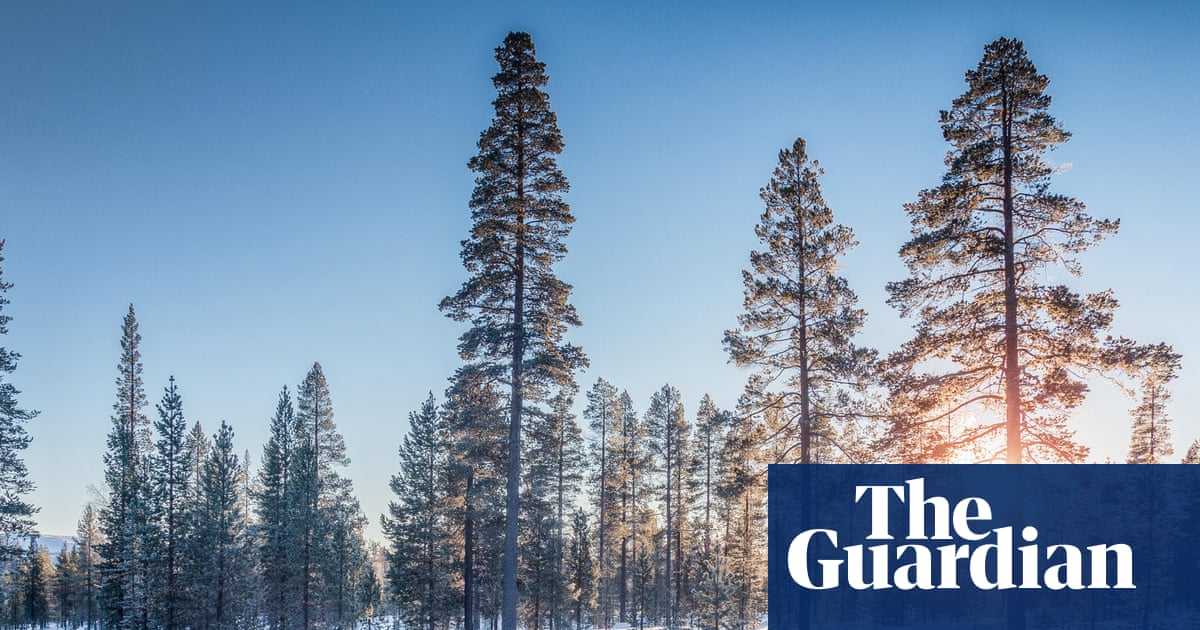
"A tree's first line of defence against freezing is its bark, which provides efficient insulation. In cold conditions, trees also enter a form of hibernation, with changes at a cellular level: cells dehydrate, harden and shrink, increasing their sugar concentration. This is the botanical equivalent of adding antifreeze, helping to prevent the formation of ice crystals. But when temperatures drop suddenly, trees may not have fully acclimatised."
"The outer layer of wood may still contain water, which freezes and expands, putting pressure on the structure of the tree. In severe cold the tree may give way, sometimes with an explosive sound, producing deep vertical gaps known as frost cracks. Frost cracking is especially likely on sunny days when the temperature of the sun-warmed bark drops rapidly as night falls."
Bark provides efficient insulation as the first line of defence against freezing. Trees enter a hibernation-like state in cold, with cells dehydrating, hardening, shrinking and concentrating sugars to act like antifreeze and limit ice formation. Rapid temperature drops can leave outer wood water-filled, which freezes, expands and stresses the tree structure. Severe cold can cause trees to split with explosive sounds, producing deep vertical frost cracks. Frost cracking often occurs when sun-warmed bark cools quickly at night. Frost cracks can invite insects and fungi, and the sudden noises can be unsettling though not typically dangerous to bystanders.
Read at www.theguardian.com
Unable to calculate read time
Collection
[
|
...
]