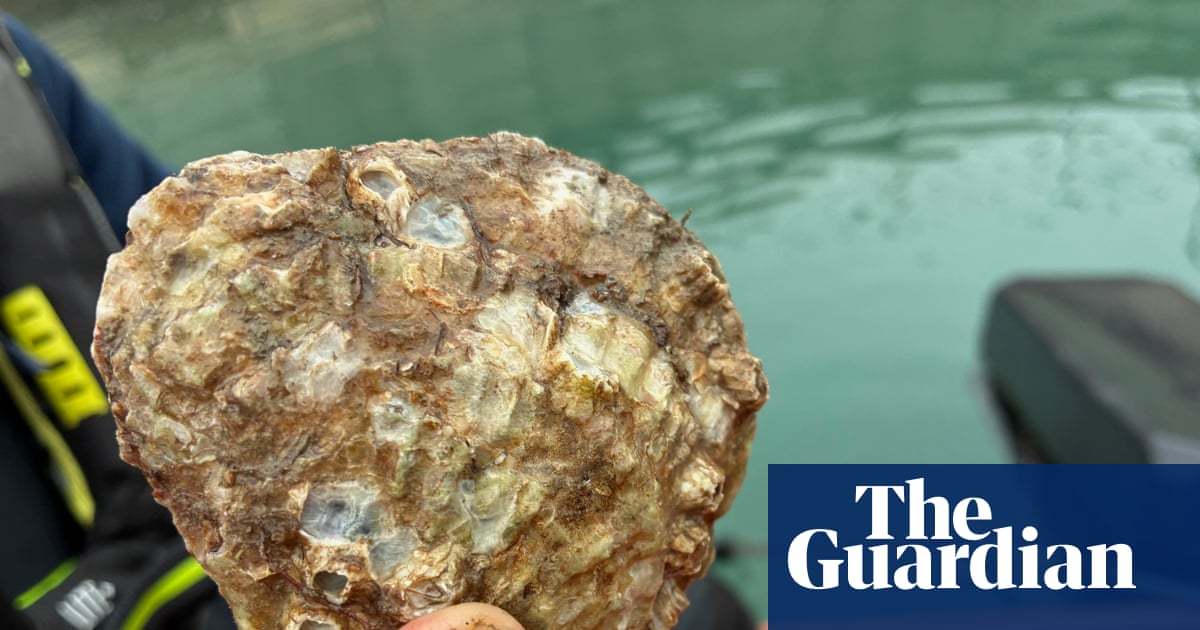
"The dinghy slowed to a stop at a long line of black bobbing baskets and David Lawlor reached out to inspect the first one. Inside lay 60 oysters, all with their shells closed, shielding the life within. They look great, beamed Lawlor. So did their neighbours in the next basket and the ones after that, all down the line of 300 baskets, totalling 18,000 oysters."
"They are amazing climate heroes, said Lawlor, co-founder of Green Ocean Foundation, a nonprofit that is driving efforts in Dublin. They are natural filter feeders. Each oyster filters at a rate of 190 litres of seawater a day. By feeding on plankton and nitrates, the oysters clear algae and help sunlight to reach the seafloor, boosting sea grass a carbon sink which in turns helps other species and improves coastal biodiversity and marine habitat."
"This pioneering project in Dun Laoghaire harbour is betting that a species that thrived here for millennia before the waters became an oyster graveyard can do so again. Similar restoration projects are unfolding elsewhere in a continent that once had sprawling reefs of the European flat oyster (Ostrea edulis) until overfishing, dredging and pollution wreaked obliteration. Reefs create rich ecosystems, provide a habitat for almost 200 fish and crustacean species and play a vital role in stabilising shorelines, nutrient cycling and water filtration."
A line of 300 baskets in Dun Laoghaire harbour contains 18,000 European flat oysters, each basket holding 60 closed shells. The oysters are being cultivated not for consumption but to reproduce and restore oyster reefs that were wiped out more than two centuries ago. Oyster reefs historically supported nearly 200 fish and crustacean species and provided shoreline stabilization, nutrient cycling and water filtration. Each oyster filters about 190 litres of seawater daily, reducing algae and promoting seagrass growth, which acts as a carbon sink. Green Ocean Foundation coordinates the project, following similar restoration efforts across Europe and New York.
Read at www.theguardian.com
Unable to calculate read time
Collection
[
|
...
]