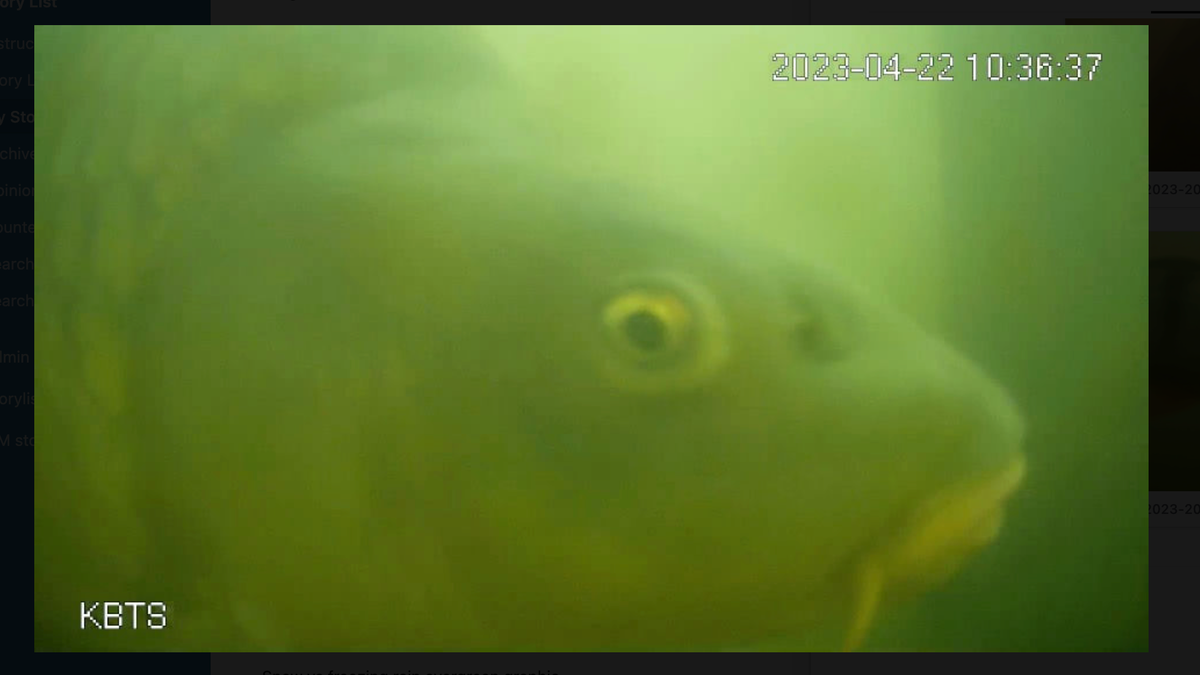
"Many fish species—including bleak, catfish, eels and pike—traverse the Netherlands' numerous waterways in the spring to reach their spawning grounds upstream. Even as aquatic creatures are starting to fill the canals, however, ships are still sparse in the early spring, and the locks that allow movement through the water are often closed. This creates an obstacle for migrating fish, most of which start their journeys around this time of year, when the water is first starting to warm."
"Started in 2021, this project allows viewers around the world to monitor the feed from an underwater camera. When they see a fish that wants to move through the lock, they can ring the doorbell and alert operators to the finned animal waiting outside. The project is a good mix of doing something for nature and for people to join and do something, says Anne Nijs, an ecologist for the city of Utrecht and one of the Fish Doorbell's originators."
"For some, this means not being able to reach spawning grounds in time to lay eggs under favorable conditions. And for others, it means having no escape from roaming predators. Operators and municipal employees had long wanted a way to let fish pass through the Weerdsluis, or weathered lock, but it's not as easy as pressing a button."
In Utrecht, Netherlands, fish migrating to spawning grounds become blocked behind the Weerdsluis lock during early spring when ships are sparse and locks remain closed. Multiple fish species including bleak, catfish, eels, and pike traverse Dutch waterways annually, but obstacles prevent timely passage to breeding grounds. The Fish Doorbell project, launched in 2021 and now in its sixth year, enables worldwide viewers to monitor an underwater camera feed and ring a doorbell alerting operators when fish appear. This alerts lock operators to manually open the 1600s-era lock, which requires 30 minutes to an hour of manual operation. The initiative combines environmental support with public engagement, allowing citizens globally to participate in nature conservation.
Read at www.scientificamerican.com
Unable to calculate read time
Collection
[
|
...
]