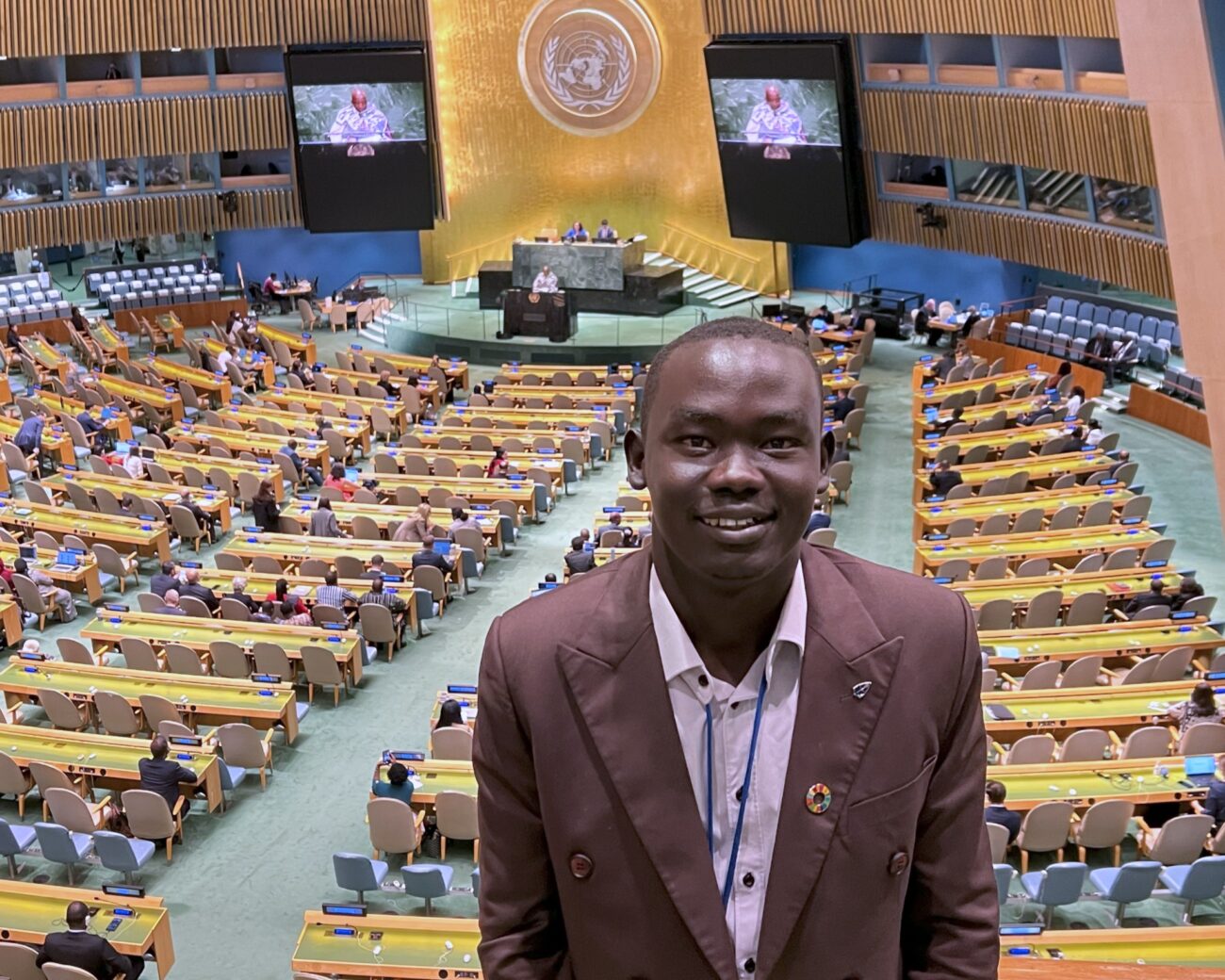
"When we were children, we relied on the knowledge of our elders-the call of birds, the shape of clouds, the rhythm of winds-to read the weather. But our human-induced changes bent nature out of recognition. The signs no longer matched what our parents and grandparents had known. The climate we inherited had been replaced by something unfamiliar and unforgiving. Later, living as a refugee in Uganda, I studied agriculture to confront the hunger that shaped our lives."
"That realization brought me to the Columbia Climate School and eventually to intern with the United Nations Secretary-General's Climate Action Team, where I analyze national climate plans from nearly 200 countries. I followed COP30 closely, watching the diplomacy unfold. The debates were fierce-over fossil-fuel phaseout language, adaptation funding and responsibility. But as someone whose childhood memories are built on disaster and constant adaptation, the gap between negotiation rooms and the real world has never"
Millions of people live on climate frontlines, facing floods, destroyed crops, and recurring storms. In South Sudan, ancestral villages have been submerged and about 700,000 people endure catastrophic flooding annually, driving more than 76 percent of the population below the poverty line. Traditional weather knowledge no longer predicts changing patterns because human-driven climate change has altered environmental signals. Individual experience shows that resilience requires more than seeds and hope; it requires knowledge, planning, and systemic support. Negotiations over fossil fuel phaseouts, adaptation funding, and responsibility remain contentious, while practical solutions for vulnerable communities lag.
Read at State of the Planet
Unable to calculate read time
Collection
[
|
...
]