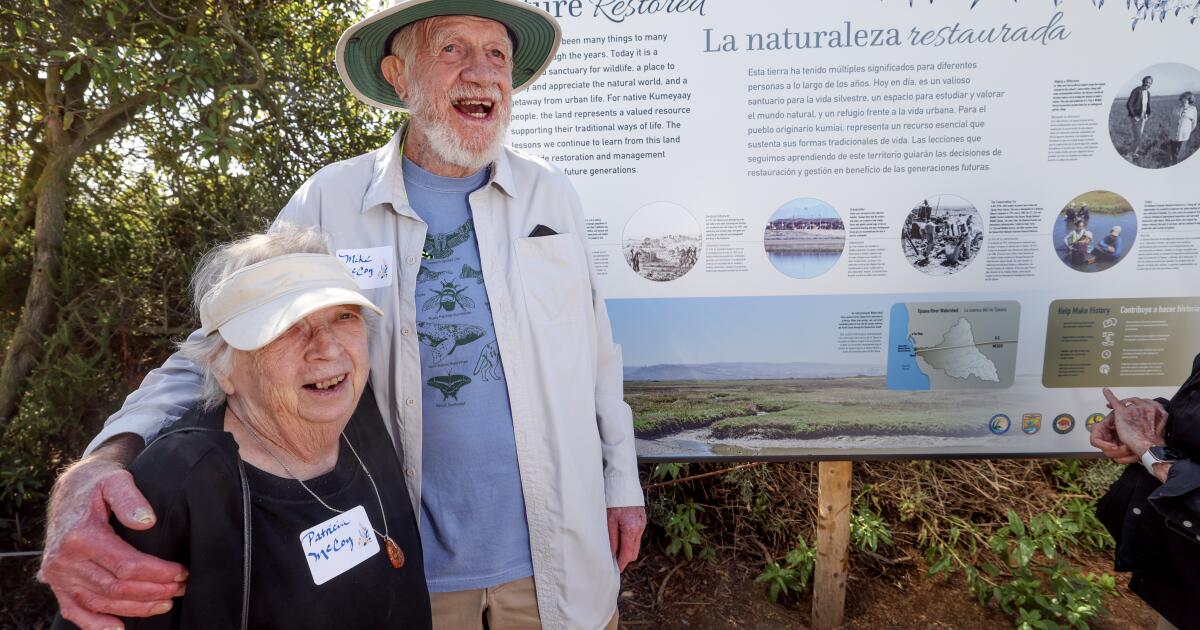
"Mike and Patricia McCoy answered the door of their cozy cottage in Imperial Beach, a short stroll from crashing waves and several blocks from the Tijuana River Estuary, where California meets Mexico and the hiking trails are named for them. They offered me a seat in a living room filled with awards for their service and with books, some of them about the wonders of the natural world and the threat to its survival. The McCoys are the kind of people who look you in the eye and give you their full attention, and Patricia's British accent carries an upbeat, birdsong tone."
"settled in Imperial Beach in the early 1970s - Mike was a veterinarian, Patricia a teacher - when the coastal protection movement was spreading across the state amid fears of overdevelopment and privatization. In 1972, voters approved Proposition 20, which essentially laid down a hallmark declaration: "The California coast is a public treasure, not a private playground." Four years later, the Coastal Act became state law, regulating development in collaboration with local government agencies, guaranteeing public access and protecting marine and coastal habitats."
Mike and Patricia McCoy settled in Imperial Beach in the early 1970s; Mike worked as a veterinarian and Patricia as a teacher. They became central figures in California coastal conservation amid concerns about overdevelopment and privatization. Voter approval of Proposition 20 in 1972 and the Coastal Act in 1976 established public access and habitat protections that aligned with their goals. They opposed repurposing the roughly 2,500-acre Tijuana River Estuary and pushed for its restoration as one of Southern California's last major undeveloped wetlands, home to 370 bird species and diverse wildlife. They continue active conservation work into their eighties.
Read at Los Angeles Times
Unable to calculate read time
Collection
[
|
...
]