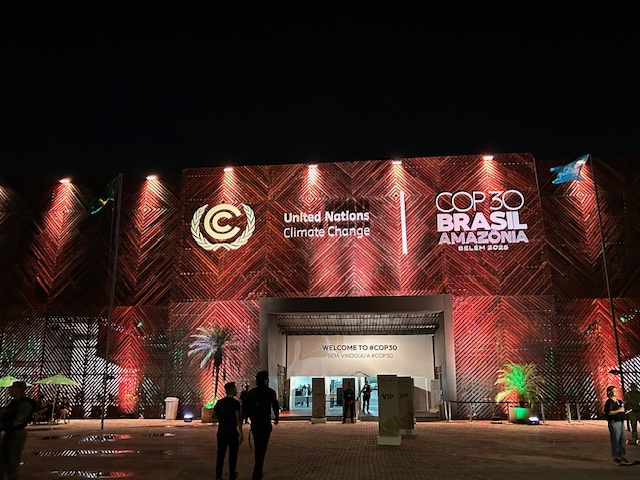
"COP30 came at a pivotal moment where conversations are shifting from ambitious commitments to the concrete implementation of climate solutions. Around the world, the effects of climate change are no longer distant projections. They are unfolding in real time. Communities are experiencing severe flooding, extreme heat, agricultural disruption, and displacement, with emerging economies bearing the most acute impacts. And financing adaptation isn't charity; it's risk management for communities and economies that underpin national and global stability."
"The proceedings concluded with an agreement to triple adaptation funding for developing nations and the clean energy transition by 2035, and to reach the $1.3 trillion annual spending goal for climate action. This year's conference also made headlines for reasons beyond the negotiations-including Indigenous groups who blocked the entrance to COP to demand better protections for the Amazon, and a fire that broke out inside the venue."
COP30 in Belém ended with commitments to triple adaptation funding for developing nations, accelerate the clean energy transition by 2035, and reach a $1.3 trillion annual climate spending goal. Conversations shifted from ambitious pledges to concrete implementation and financing mechanisms. The summit highlighted immediate climate impacts—severe flooding, extreme heat, agricultural disruption, and displacement—disproportionately affecting emerging economies. Financing adaptation was framed as risk management for communities and national stability. Indigenous groups blocked the COP entrance to demand stronger Amazon protections, and a fire occurred inside the venue. Representatives from Columbia and the Climate School engaged in panels, talks, and networking.
Read at State of the Planet
Unable to calculate read time
Collection
[
|
...
]