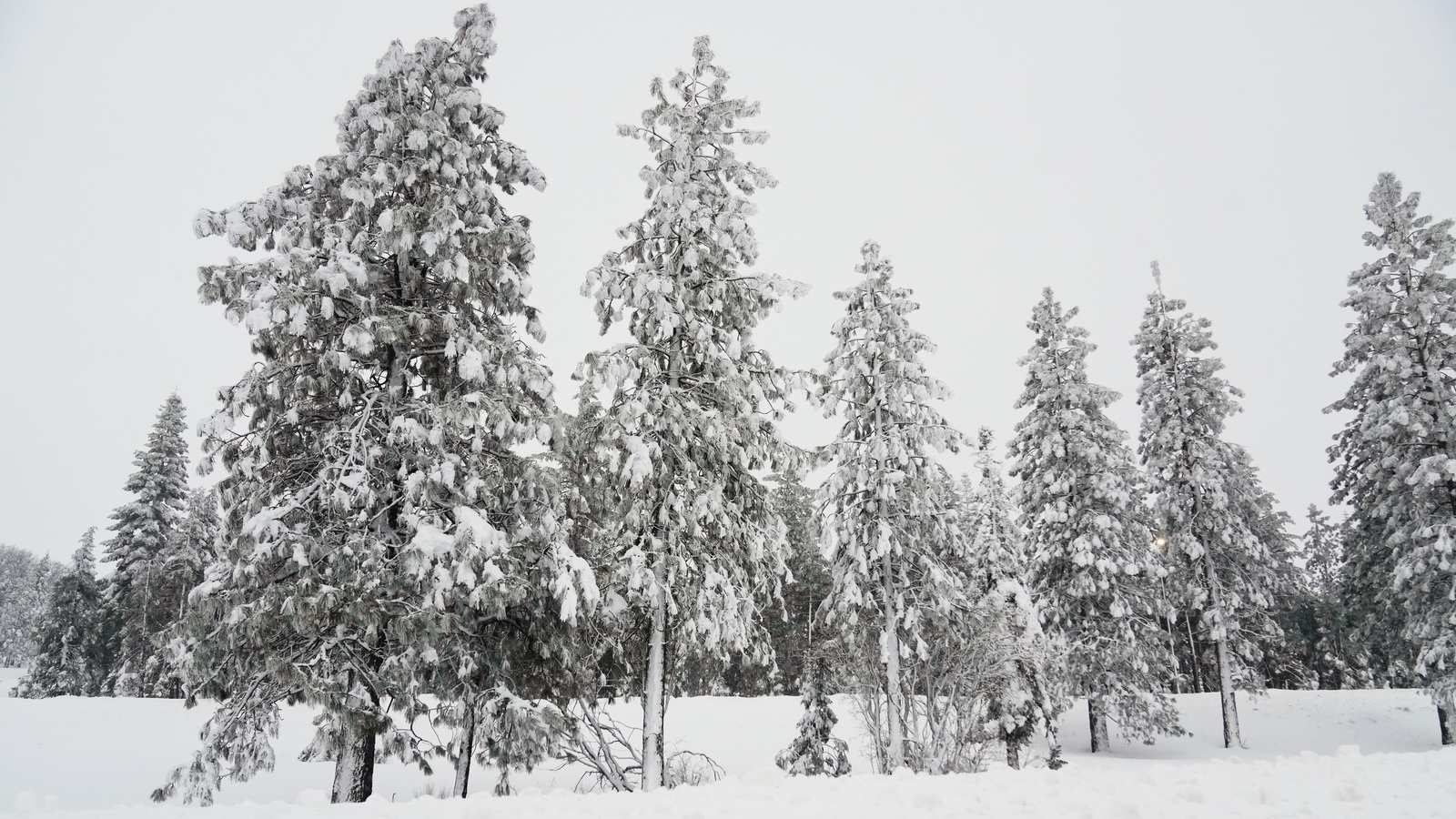
"The new snow did not have time to bond to the earlier layer before the avalanche near Lake Tahoe killed at least eight backcountry skiers, said Craig Clements, a meteorology professor at San Jose State University, who has conducted avalanche research. Six skiers survived and rescuers were still searching for another one who was still missing on Wednesday."
"When weather is dry and clear, as it had been in the Sierra Nevada since January, snow crystals change and can become angular or round over time, Clements said. If heavy new snow falls on the crystals, the layers often can't bond and the new snow forms what is called a storm slab over a weaker layer. "Because it's on a mountain, it will slide," when it's triggered by any change in the tension above or below, sometimes naturally but also because of people traversing the area, Clements said."
A weekslong snow drought in the Sierra Nevada hardened existing snow crystals into angular or rounded shapes, weakening bonding between layers. Several feet of heavy new snow accumulated on top of the hardened layer and did not have time to bond, forming a storm slab over a weaker layer. Storm slabs are prone to sliding when triggered, with highest danger in the first 24 to 48 hours after large snowfall. Avalanche warnings were issued. The avalanche near Lake Tahoe occurred during a winter storm, killed at least eight backcountry skiers, left six survivors, and left one person missing.
Read at ABC7 San Francisco
Unable to calculate read time
Collection
[
|
...
]