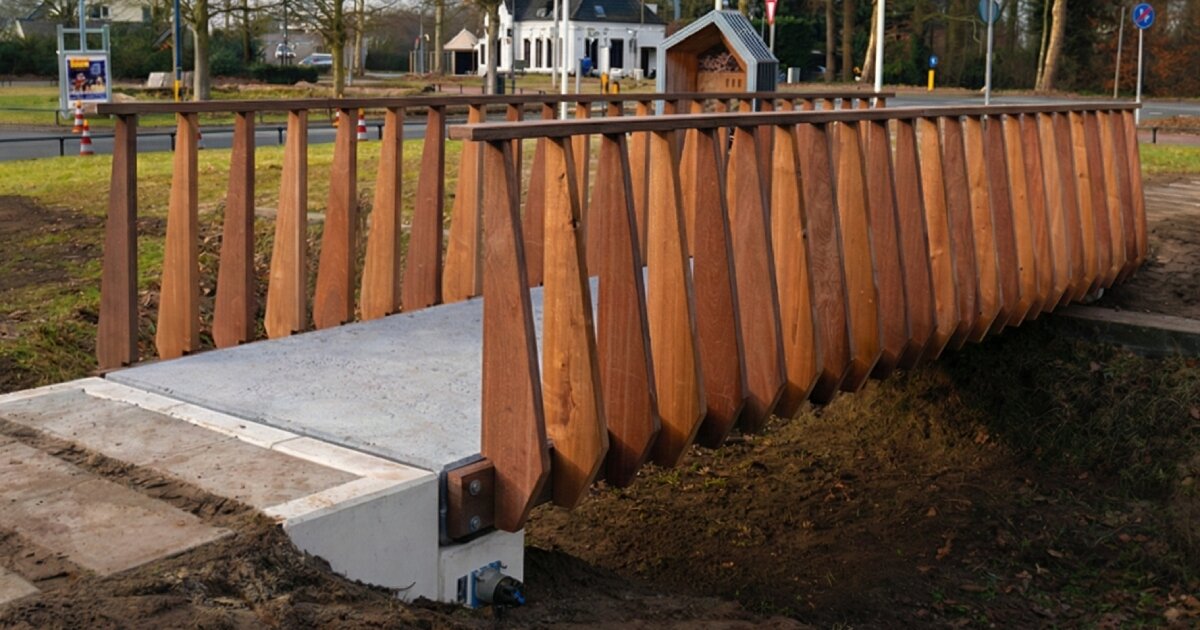
"In Rosmalen, Netherlands, Paebbl and Heijmans unveil the dubbed world's first pedestrian made of bridgerecycled, CO₂-neutral concrete that can capture and store carbon dioxide over time. The structure is seven meters long and uses 75 percent circular raw materials. For the project, recycled concrete replaced normal sand and gravel, so no new sand or gravel had to be taken from nature, a way to protect rivers, landscapes, and ecosystems that are often damaged by mining."
"In this project, 30 percent of the normal cement was replaced with these carbon-storing materials by Paebb, which also speed up a natural process called mineralization. In nature, minerals slowly react with carbon dioxide and lock it away in solid form. Paebbl's technology makes this process happen faster, as the company says, so when carbon dioxide is added to Paebbl materials, it becomes trapped inside stable minerals. This means the carbon dioxide cannot escape back into the air."
"It is a charcoal-like material made of plant waste and can help absorb carbon dioxide while they grow. When they turn into biochar, that carbon stays locked inside instead of returning to the atmosphere. By adding biochar to the concrete, the bridge stores even more carbon. Concrete is usually made using cement, sand, and gravel, which can create a lot of carbon"
A seven-meter pedestrian bridge in Rosmalen, Netherlands is constructed from 75 percent circular recycled raw materials. Recycled concrete replaced conventional sand and gravel, eliminating the need for new sand or gravel extraction that damages rivers and ecosystems. Thirty percent of normal cement was replaced with Paebbl carbon-storing materials, which accelerate natural mineralization that reacts minerals with CO₂ and locks it in solid form. When CO₂ is added to the Paebbl materials, it becomes trapped inside stable minerals and cannot escape back into the air. The bridge stores 66 kilograms of CO₂, with about 220 kilograms stored per tonne of material. Biochar from plant waste was added to increase carbon absorption and keep the stored carbon locked for decades or centuries, making the structure suitable for long-term carbon storage.
Read at designboom | architecture & design magazine
Unable to calculate read time
Collection
[
|
...
]