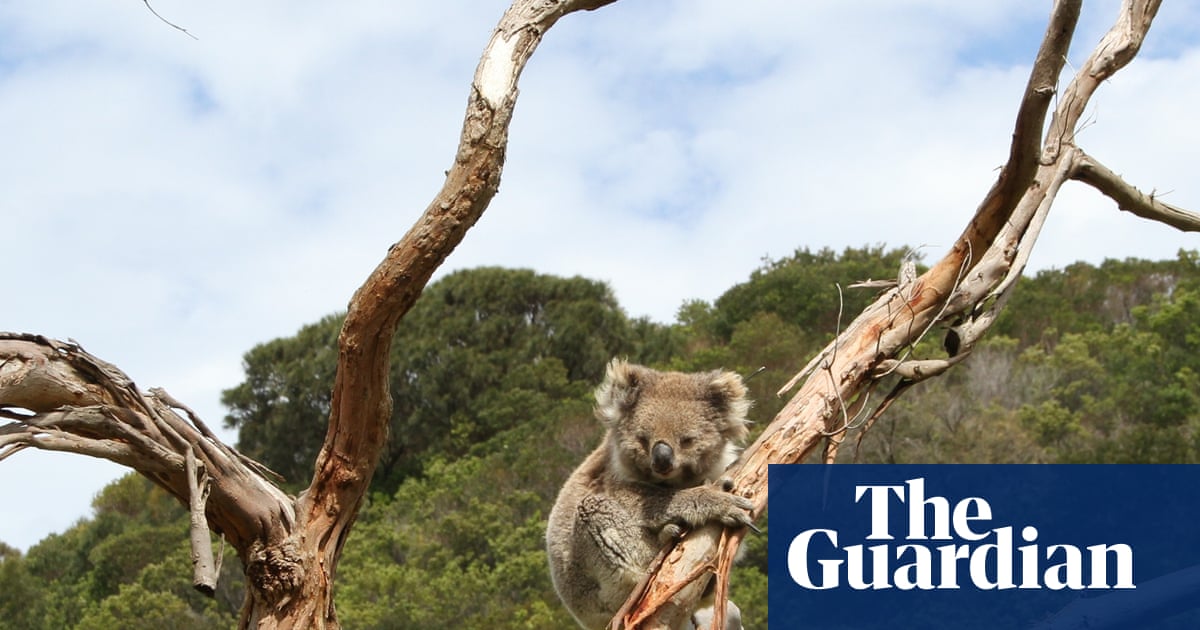
"On French Island in Victoria's Western Port Bay, koalas are dropping from trees. Eucalypts have been eaten bare by the marsupials, with local reports of some found starving and dead. Multiple koalas usually solitary animals can often be seen on a single gum. Koalas were first introduced to French Island from the mainland in the 1880s, a move that protected the species from extinction in the decades they were extensively hunted for their pelts."
"There are between 729,000 to 918,000 koalas nationally, according to the latest estimate from the CSIRO's National Koala Monitoring Program. Those figures are up from a 2023 estimate of 287,830 to 628,010 koalas nationally, but experts have pointed out the updated figures reflect more accurate technology and extensive survey work, rather than a true increase in the koala population. The koala population in the Mount Lofty Ranges in South Australia has grown so large that it is a threat to its own long-term survival."
Koalas introduced to French Island in the 1880s escaped mainland hunting and thrived in absence of predators and common diseases. Lack of predators and disease allowed population growth that has led to severe habitat depletion and starvation on the island. National population estimates range widely due to improved survey technology rather than confirmed population increase. Regional contrasts persist: populations are declining in north-eastern states while parts of southern Australia, such as the Mount Lofty Ranges, host booming koala numbers. Ideal climatic and soil conditions drove local booms that now threaten long-term survival. Managing these opposing trends complicates conservation decisions.
Read at www.theguardian.com
Unable to calculate read time
Collection
[
|
...
]