"Warwick, N., Griffiths, P., Keeble, J., Archibald, A., & Pyle, J. Atmospheric implications of increased Hydrogen use. GOV.UK https://www.gov.uk/government/publications/atmospheric-implications-of-increased-hydrogen-use (2022)."
"Derwent, R. G. et al. Global modelling studies of hydrogen and its isotopomers using STOCHEM-CRI: likely radiative forcing consequences of a future hydrogen economy. Int. J. Hydrog. Energy 45, 92119221 (2020)."
"Paulot, F. et al. Global modeling of hydrogen using GFDL-AM4.1: sensitivity of soil removal and radiative forcing. Int. J. Hydrog. Energy 46, 1344613460 (2021)."
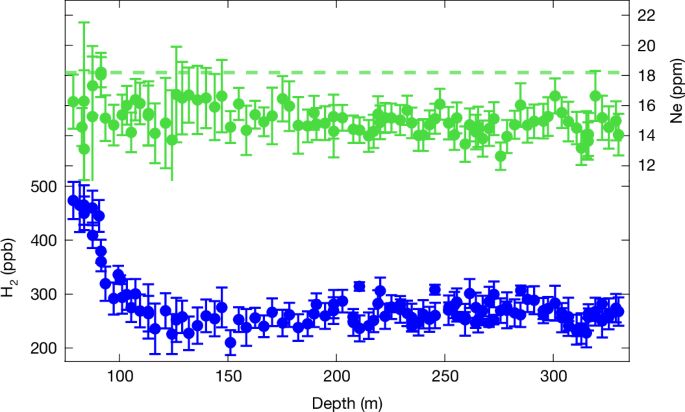
Increased hydrogen emissions interact with atmospheric chemistry to modify concentrations of H2, methane, hydroxyl radicals, and other trace gases. Atmospheric H2 lifetimes and sinks depend on soil uptake, chemical removal, and exchange with polar ice. Modeling with multiple chemical transport and climate models indicates potential changes in radiative forcing and global warming potential depending on emission pathways and isotopomer behavior. Soil removal sensitivity and stratospheric water vapor changes can amplify or dampen climate effects. Multi-model assessments reveal uncertainty ranges but underscore the need to account for indirect radiative effects when projecting a larger hydrogen economy.
Read at www.nature.com
Unable to calculate read time
Collection
[
|
...
]