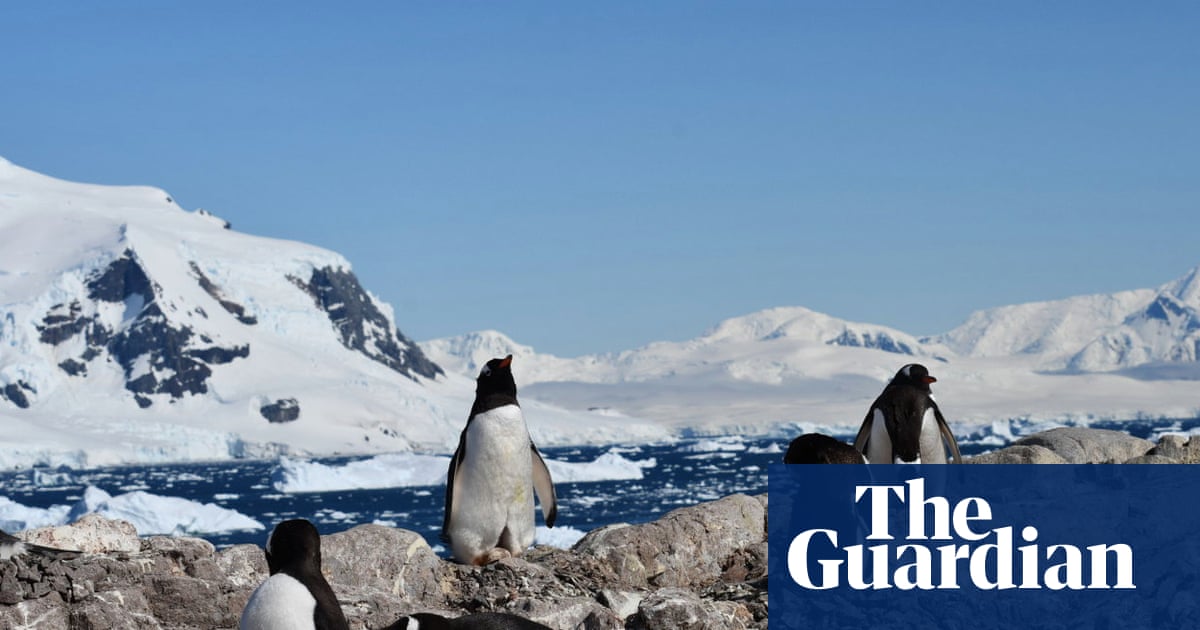
"The researchers examined changes in the timing of penguin breeding between 2012 and 2022, specifically their settlement at a colony the first date at which penguins continuously occupied a nesting zone. Three species Adelie (Pygoscelis adeliae), chinstrap (P antarcticus) and gentoo (P papua) were studied, with colony sizes ranging from a dozen nests up to hundreds of thousands of nests. A chinstrap penguin with its chick. Photograph: Ignacio Juarez Martinez"
"said the report's lead author, Dr Ignacio Juarez Martinez. The changes are happening so fast that the penguins could end up breeding at times when their prey is not available yet. This could result in a lack of food for the penguin chicks in the first weeks of their life, which could be fatal. Even if the penguins could match their prey's behaviour, we can't expect them to keep this pace up much longer."
Penguins in Antarctica advanced their breeding season markedly between 2012 and 2022, with settlement at colonies occurring earlier. Time-lapse cameras recorded settlement dates and air temperatures at 37 colonies and some sub-Antarctic islands. Three species—Adelie, chinstrap and gentoo—showed advances, with gentoo colonies averaging a 13-day earlier settlement and some up to 24 days. Some colonies shifted by more than three weeks. Earlier breeding risks a mismatch between chick-rearing and prey availability, potentially causing food shortages in chicks' first weeks and increasing mortality risk. Rapid change may outpace penguins' ability to stay synchronised with prey.
Read at www.theguardian.com
Unable to calculate read time
Collection
[
|
...
]