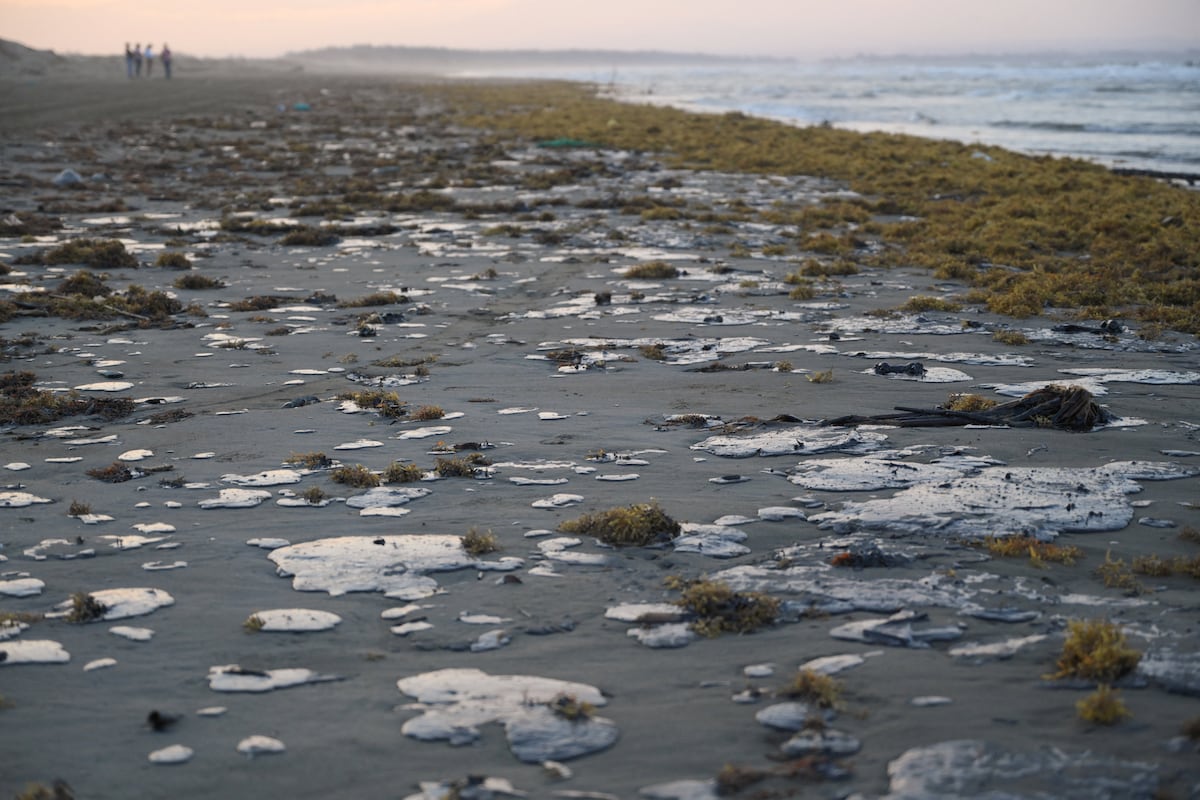
"Beaches, mangroves, fish, turtles and manatees. Little by little, oil has coated them all. About two weeks have been enough for the sticky black residue to permeate everything in its path. Its advance has been met with an outcry. Since the first fishermen in the Gulf of Mexico reported the discovery of chapapote (petroleum residue) in their nets on March 2, the progression has been documented by the affected communities."
"It has been 11 days since the news of the spill broke, but so far there has been no statement from the central government. In Veracruz, where most of the affected communities are located, communication has been poor. Faced with increasing accusations, Rocio Nahle, the state's governor, initially opted for denial."
"Neither the 30 towns hit by the spill in Veracruz nor the nine in Tabasco, nor the complaints, nor the videos and images of the crude oil covering entire ecosystems, have produced any efforts from the authorities to address the problem."
An oil spill in the Gulf of Mexico has coated over 142 miles of coastline in Veracruz and Tabasco, Mexico, affecting beaches, mangroves, fish, turtles, and manatees. Fishermen first reported petroleum residue in their nets on March 2, and affected communities have documented the progression through videos and images. Despite impacting 30 towns in Veracruz and nine in Tabasco, the central government has issued no statement after 11 days. State governor Rocio Nahle initially denied the spill's existence, employing a strategy of minimizing facts similar to her previous response to deadly floods. Authorities have provided minimal assistance despite widespread complaints and environmental damage to coastal ecosystems and livelihoods.
#oil-spill-environmental-disaster #government-transparency-and-accountability #coastal-community-impact #mexico-environmental-crisis #fishing-and-tourism-disruption
Read at english.elpais.com
Unable to calculate read time
Collection
[
|
...
]