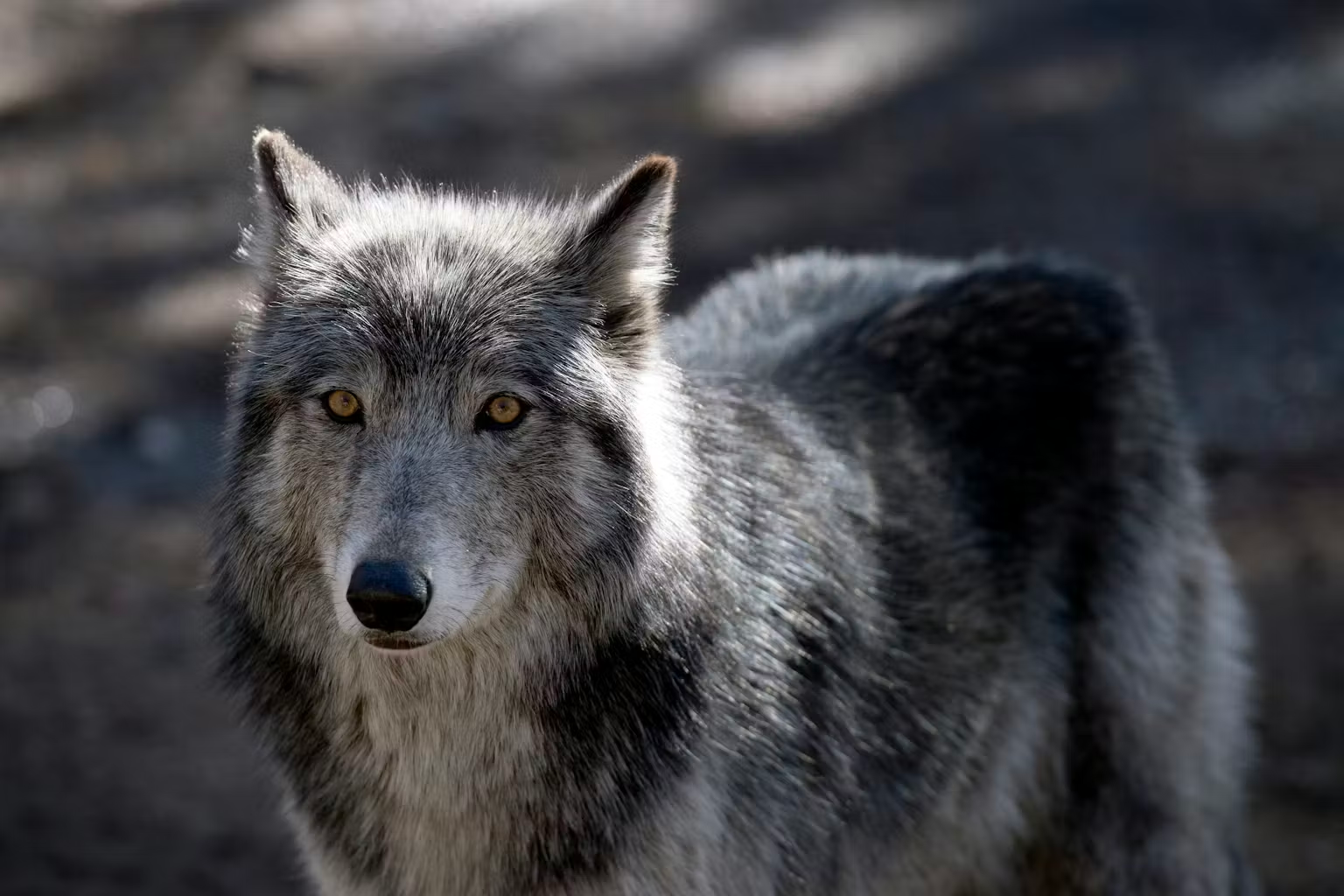
"Management of gray wolves ( Canis lupus) has a reputation for being one of the most contentious conservation issues in the United States. The topic often conjures stark images of supporters versus opponents: celebratory wolf reintroductions to Yellowstone National Park and Colorado contrasted with ranchers outraged over lost cattle; pro-wolf protests juxtaposed with wolf bounty hunters. These vivid scenes paint a picture of seemingly irreconcilable division."
"But in contrast to these common caricatures, surveys of public opinion consistently show that most people around the world hold positive views of wolves, often overwhelmingly so. This trend holds true even in politically conservative U.S. states, often assumed to be hostile toward wolf conservation. For example, a recent study of ours in Montana found that an increasing majority of residents, 74% in 2023, are tolerant or very tolerant of wolves."
"We are social scientists who study the human dimensions of environmental issues, from wildfire to wildlife. Using tools from psychology and other social sciences, we examine how people relate to nature and to each other when it comes to environmental issues. These human relationships often matter more to conservation outcomes than the biology of the species or ecosystems in question. Conservation challenges are typically people problems."
Management of gray wolves is widely perceived as deeply contentious, with vivid imagery of reintroductions and rancher–wolf conflict. Survey evidence shows broadly positive public attitudes toward wolves, including in politically conservative regions. In Montana, 74% of residents in 2023 reported tolerance or high tolerance for wolves. Media coverage and political rhetoric frequently amplify perceptions of irreconcilable division and may contribute to creating the conflict they portray. Social identity influences how people sort into groups and engage in intergroup dynamics. Human social relationships and identities often determine conservation outcomes more than biological factors, making conservation fundamentally a people problem.
Read at High Country News
Unable to calculate read time
Collection
[
|
...
]