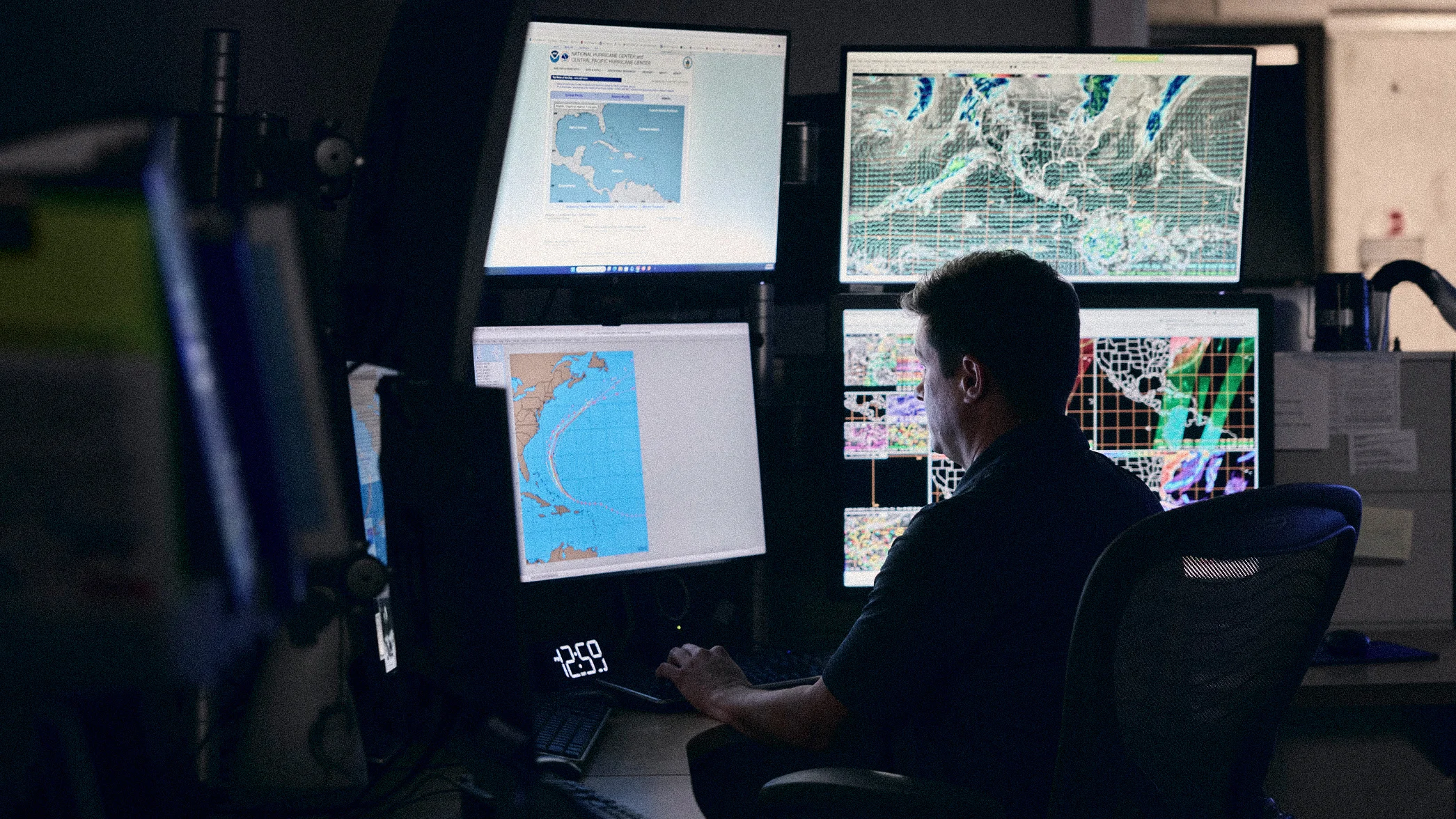
Five days before landfall, an AI model named WeatherNext predicted with 80% confidence that Melissa would rapidly intensify from a Category 1 storm to a Category 5 and make landfall in Jamaica. Traditional models were undecided about weakening and direction, but Google shared the AI predictions with the U.S. National Hurricane Center. The center used the information to produce a record-breaking high-intensity forecast. Jamaica’s meteorological service treated the early, consistent forecast as critical, repeatedly communicating it to the public and urging preparation. When the storm arrived, wind speeds exceeded 131 miles per hour, causing catastrophic damage, including roofs torn off more than 120,000 buildings and tens of thousands destroyed, with 45 deaths. The early warnings likely helped save additional lives. The forecasting approach relies on AI trained on decades of past weather data rather than only physics-based simulations run on expensive supercomputers.
"Five days before the storm made landfall—while traditional weather models were undecided on whether it would weaken and turn in another direction—the AI model, called WeatherNext, predicted with 80% confidence that Melissa would rapidly intensify from a Category 1 storm to a Category 5 and land in Jamaica. Google sent its predictions to the U.S.'s National Hurricane Center, which used the models to help make a record-breaking high-intensity forecast."
"That early forecast "was critical," says Evan Thompson, principal director of the Meteorological Service of Jamaica. "We want to get the information as soon as possible and then continuously drill that message to the public." A Category 5 hurricane had never made landfall on the island. The weather office warned residents that anything they had experienced before "would pale in comparison," Thompson says, and urged people to prepare however they could."
"When the storm finally hit, the forecast was correct. Wind speeds topped 131 miles per hour, and the damage was catastrophic: Roofs were torn off more than 120,000 buildings, and tens of thousands of others were destroyed, leaving families homeless. Forty-five people were killed. But the early warnings—and the fact that they stayed consistent as the storm approached—meant that people took them seriously, and likely saved additional lives."
"For decades, weather forecasts have worked the same way: Expensive supercomputers, often owned by governments, run complicated physics-based models that try to mimic what's happening in the atmosphere. AI works differently, using decades of past weather data to predict what will happen next. "It's a completely new way to simulate the atmosphere," says Mike Pritchard, an atmospheric physicist and director of climate simulation research at Nvidia."
#ai-weather-forecasting #hurricane-prediction #national-hurricane-center #jamaica-storm-preparedness #nvidia-climate-simulation
Read at Fast Company
Unable to calculate read time
Collection
[
|
...
]