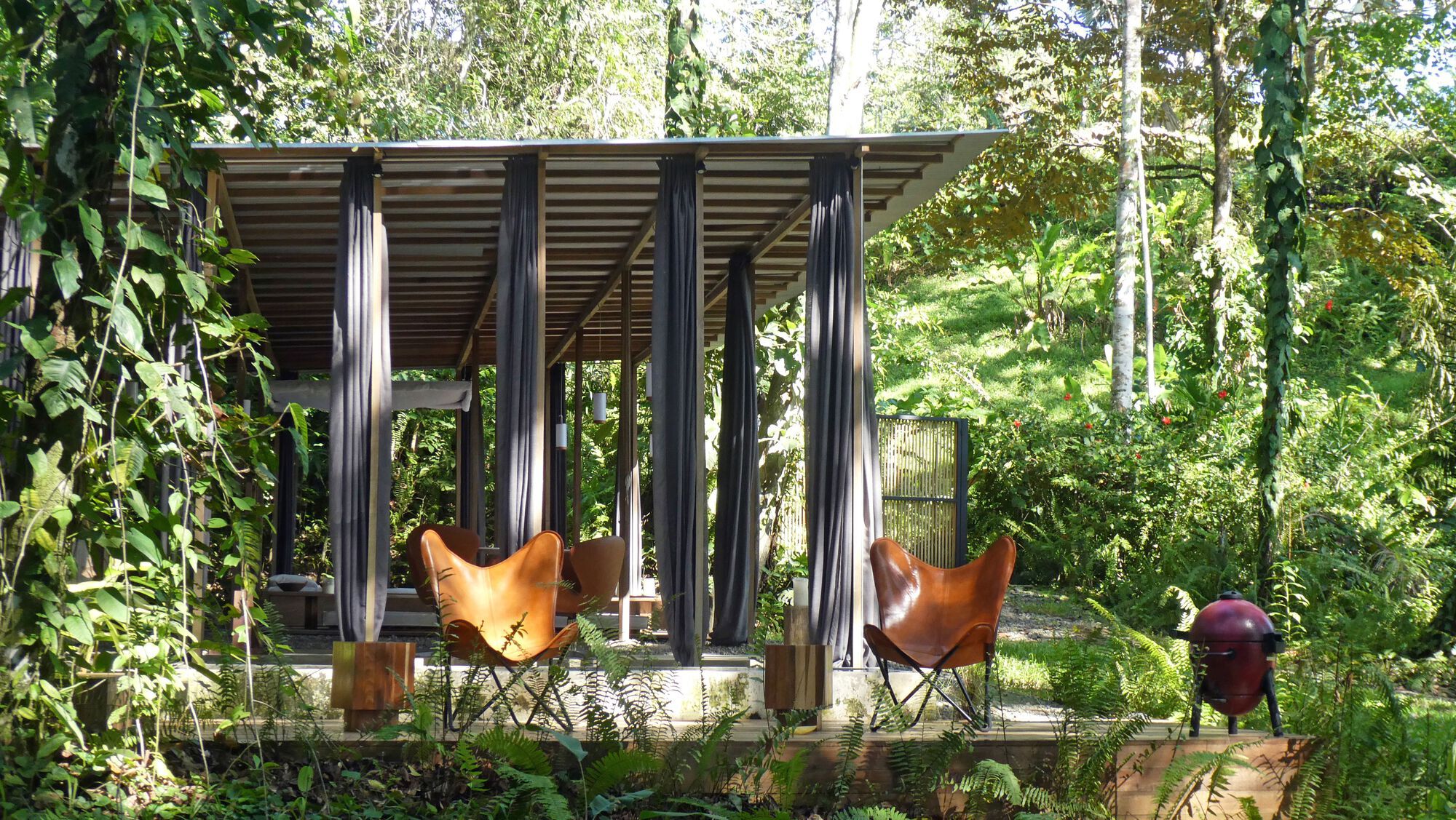
Costa Rica's remote forest and jungle cabins demand specialized design approaches beyond standard tropical architecture. The primary environmental challenges are extreme precipitation exceeding 150 mm monthly and high humidity creating wet-bulb effects that degrade materials and cause inhabitant discomfort. Effective design requires three integrated strategies: minimal site invasion, thermal gradient creation, and passive climate mitigation. These approaches address the logistical difficulties of accessing remote locations for repairs, necessitating long-term durability and low-maintenance solutions. This surgical design philosophy balances structural resilience with climatic adaptation, distinguishing residential cabin projects from broader tourism-focused architectural studies.
"Often situated in remote forest or jungle locations, these cabins, apart from the common tropical design strategies, have to prioritize long-term durability and low-maintenance costs, particularly in regions where access for repairs is logistically difficult. This necessitates a design philosophy that favors both structural and climatic resilience."
"Building in this context requires precise design responses to two primary environmental stressors: extreme precipitation and high humidity. Costa Rica's tropical climate, while varying by altitude, generally delivers an average monthly rainfall exceeding 150 mm in many regions. This constant water load can create a "wet-bulb" effect, where stagnant, saturated air accelerates interior material degradation and creates physiological discomfort for the inhabitants."
"To design effectively under these conditions, contemporary cabin architecture employs a three-fold strategy of minimal site invasion, the creation of thermal gradients, and passive climate mitigation."
#tropical-architecture #climate-resilience #remote-cabin-design #humidity-and-precipitation-management #sustainable-building-strategies
Read at ArchDaily
Unable to calculate read time
Collection
[
|
...
]