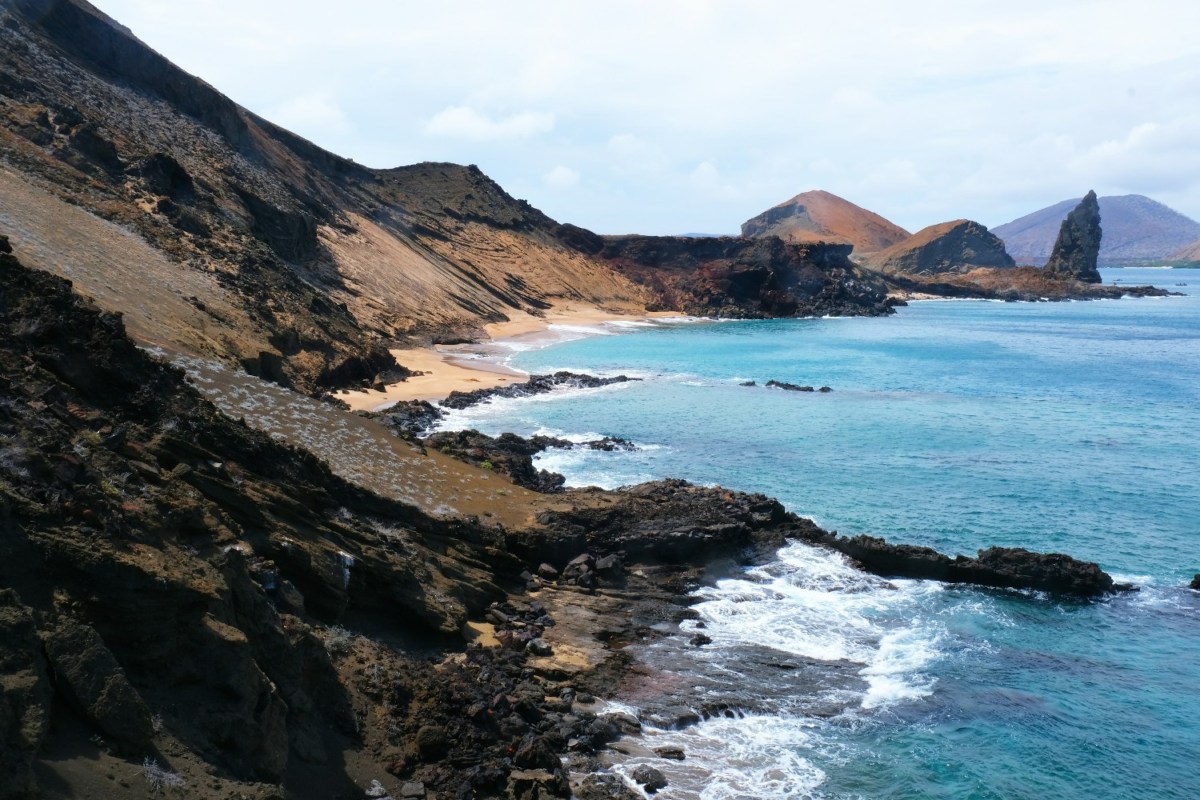
"Whether you're there to take in stunning landscapes or have a profound philosophical experience, there are plenty of good reasons to visit the Galápagos Islands. But humans aren't the only creatures that make their way to the islands that Charles Darwin helped make famous; recently, a very different species traveled there. Unlike their human counterparts, though, these beings were there to stay - and it represented something of a long-awaited return.The animal in question? The Floreana giant tortoise."
"(Yes, apparently tortoises are having a moment right now.) As Sandra Blakeslee explained in a 2015 New York Times article, several species of tortoises that called the Galápagos Islands home have gone extinct over the years. The Floreana variety, however, survived in part by breeding with another type of tortoise, and scientists have sought to bring back the original species via a breeding program."
"Understanding the tortoises' genetics wasn't the only scientific factor at play here. NASA also contributed to the effort via satellite data, which gave scientists a sense of where the tortoises would find the best habitat in order to thrive on the islands. As James Gibbs, Vice President of Science and Conservation for the Galápagos Conservancy, told NASA, "If you can place them where conditions are already right, you give them a much better chance.""
"Writing at The Guardian, Patrick Barkham described the return of the tortoises to the island, making it the first time in 180 years that they have called it home. To be more specific, 158 young tortoises were returned to the wild there. That was not the only step environmental groups took to make the island a safe haven for the reptiles: Barkham notes that rats and feral cats were removed from the island beginning in 2023. And the tortoises won't be alone there: more species are set to return to the island in the years to come."
Floreana giant tortoises have been reintroduced to their native Galápagos island after roughly 180 years without a resident population. The original Floreana lineage survived through hybridization, prompting a targeted breeding program to restore the species. NASA provided satellite data to identify suitable habitat where released tortoises would have the best chance to thrive. Environmental work on the island included removal of invasive rats and feral cats beginning in 2023. A total of 158 young tortoises were returned to the wild, and additional species are planned for future reintroductions.
#floreana-giant-tortoise #species-reintroduction #galaacutepagos-conservation #nasa-satellite-data #invasive-species-removal
Read at InsideHook
Unable to calculate read time
Collection
[
|
...
]