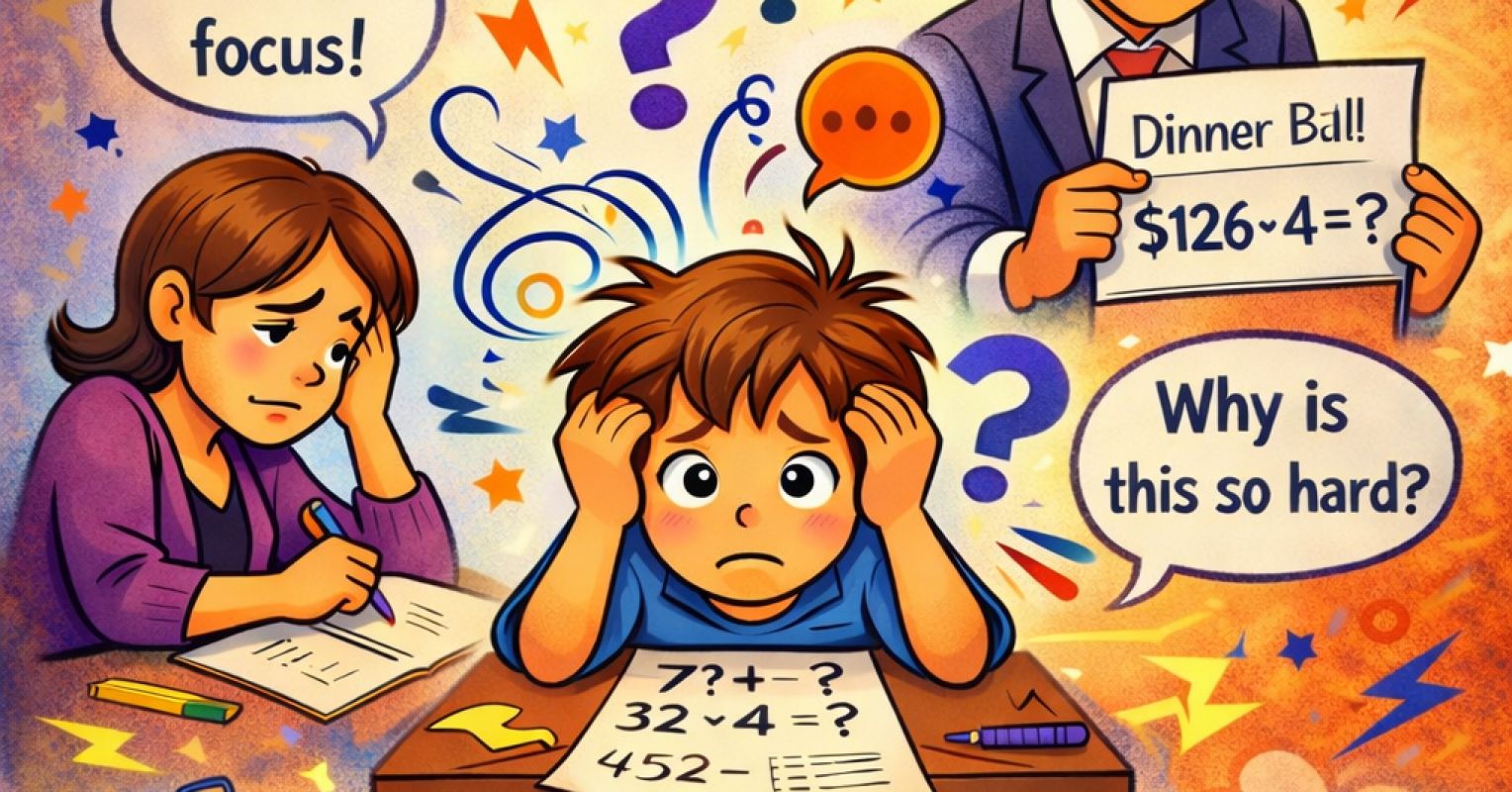
Math anxiety originates from repeated negative experiences and social cues beginning in childhood and resurfaces in adulthood during everyday tasks. Anxiety triggers threat responses that narrow attention and consume working memory essential for holding numbers and procedural steps. Worry displaces the information needed to solve problems, making simple tasks feel impossible despite adequate knowledge. Classroom cultures that emphasize speed and testing increase pressure and fear. Supportive teaching practices, reframing mistakes as learning opportunities, and reducing time pressure can lower anxiety, restore access to working memory, and improve mathematical performance and confidence.
"Many years later, these same feelings can come back, as when adults have to do simple things like divide a dinner bill or help their children with homework. There is a common phenomenon called math anxiety. It has nothing to do with the person's intelligence; instead, it was developed due to the number of experiences that occur over time, as well as through social cues and the way our brains react to stress."
"Anxiety changes how the brain functions. When someone feels under threat, even a small one, attention narrows. The mind shifts toward managing fear instead of solving problems. Math relies heavily on working memory, the mental space used to hold numbers and steps in mind. Anxiety competes for that space. As worry creeps in, it pushes out the very information needed to finish the task. Simple problems suddenly feel impossible."
Read at Psychology Today
Unable to calculate read time
Collection
[
|
...
]