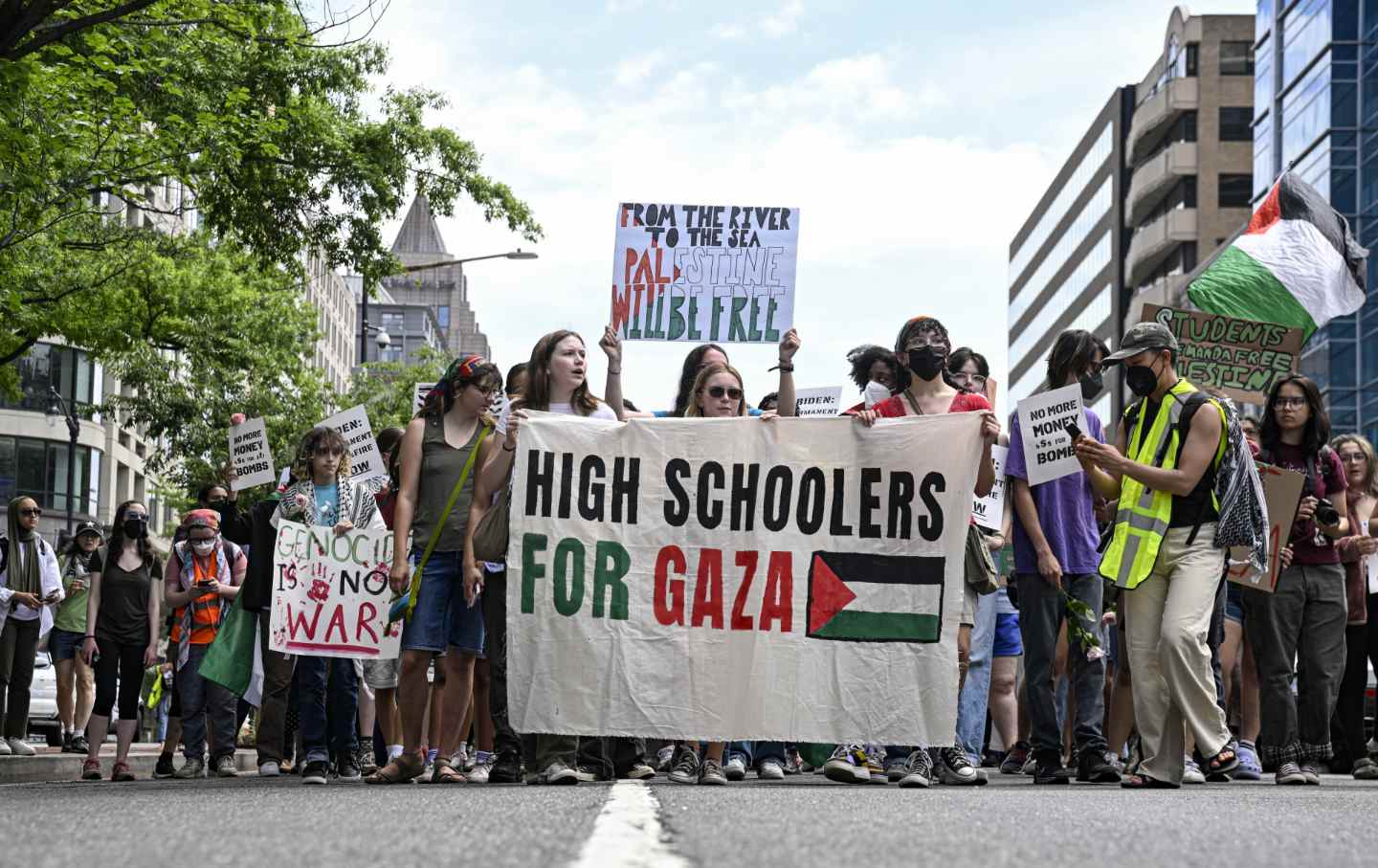
A ninth-grade student in California wrote a poem about the Gaza conflict for an Ethnic Studies project on apartheid, inspired by videos she encountered on TikTok depicting death, destruction, and suffering. When she attempted to share her work with her class, teachers warned her against distributing it more widely, explaining they themselves were prohibited from discussing Palestine and could not support her engagement with the topic. The student expressed frustration that adults shut down conversations about Palestine, suggesting institutional barriers prevent young people from processing and discussing a conflict they are actively exposed to through social media, creating a disconnect between their lived media experience and classroom discourse.
"It's always right before I fall asleep / That I'll keep thinking about humanity / While I lay in the warmth of my bed / I wonder how it feels to know that at any second, you could just be dead / I wonder how I would handle it if I were in their place / What if the blood in my veins would be the Palestinian one? / I would know what it feels like to face the end of a gun."
"When she did, her teachers warned her. If she were to share her writing more widely, they wouldn't be able to protect her. They themselves, she remembered, were 'not allowed to talk about [Palestine]' and 'couldn't help her talk about it.' When adults 'hear the name [Palestine], it's like they need to shut it down,' she said."
#student-expression-and-censorship #palestine-and-gaza-conflict #educational-restrictions #youth-activism #social-media-and-awareness
Read at The Nation
Unable to calculate read time
Collection
[
|
...
]