"What could be more important for the future of any society than the education of its children? Innovative theories abound. Educators are constantly presenting groundbreaking new paradigms for improving a child's academic achievement. In the past quarter century or so, these have included: * Expanding educational opportunities for preschoolers * Selecting the best teachers for a child * Making instruction more relevant * Establishing or strengthening character education * Providing a multidisciplinary education * Defining the boundaries for student-teacher relationships * Approaching literacy from a whole language perspective * Fostering critical thinking skills"
"Schooling was for oratorical purposes, that is, to train men to give good speeches - and it was reserved for an elite political class; females, slaves, and non-citizens of Rome need not enroll. Yet this major educational figure of Roman antiquity, who is now unknown to all but classical scholars, authored a voluminous and comprehensive reflection on educating children, Institutio oratoria ( The Education of an Orator)."
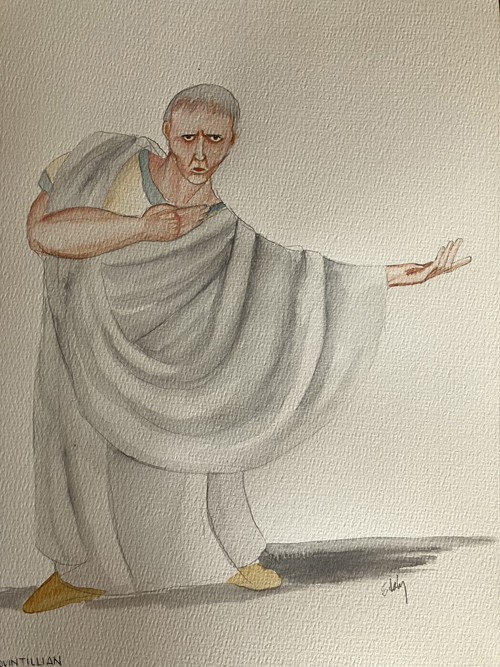
Marcus Fabius Quintilianus (35–95 CE) framed education as preparation for public speech and civic life, focusing on oratory and moral formation. Roman schooling concentrated on elite male students while excluding women, slaves, and non-citizens. Quintilian produced Institutio oratoria as a systematic guide to educating children, covering pedagogy, teacher selection, staged instruction, character formation, and techniques for cultivating rhetoric and independent thought. His recommendations include early preparation, relevant and multidisciplinary learning, clear boundaries in student-teacher relationships, literacy approaches, and fostering critical thinking. Institutio was completed around 88 CE and exists in English translation as The Orator's Education.
Read at Philosophynow
Unable to calculate read time
Collection
[
|
...
]