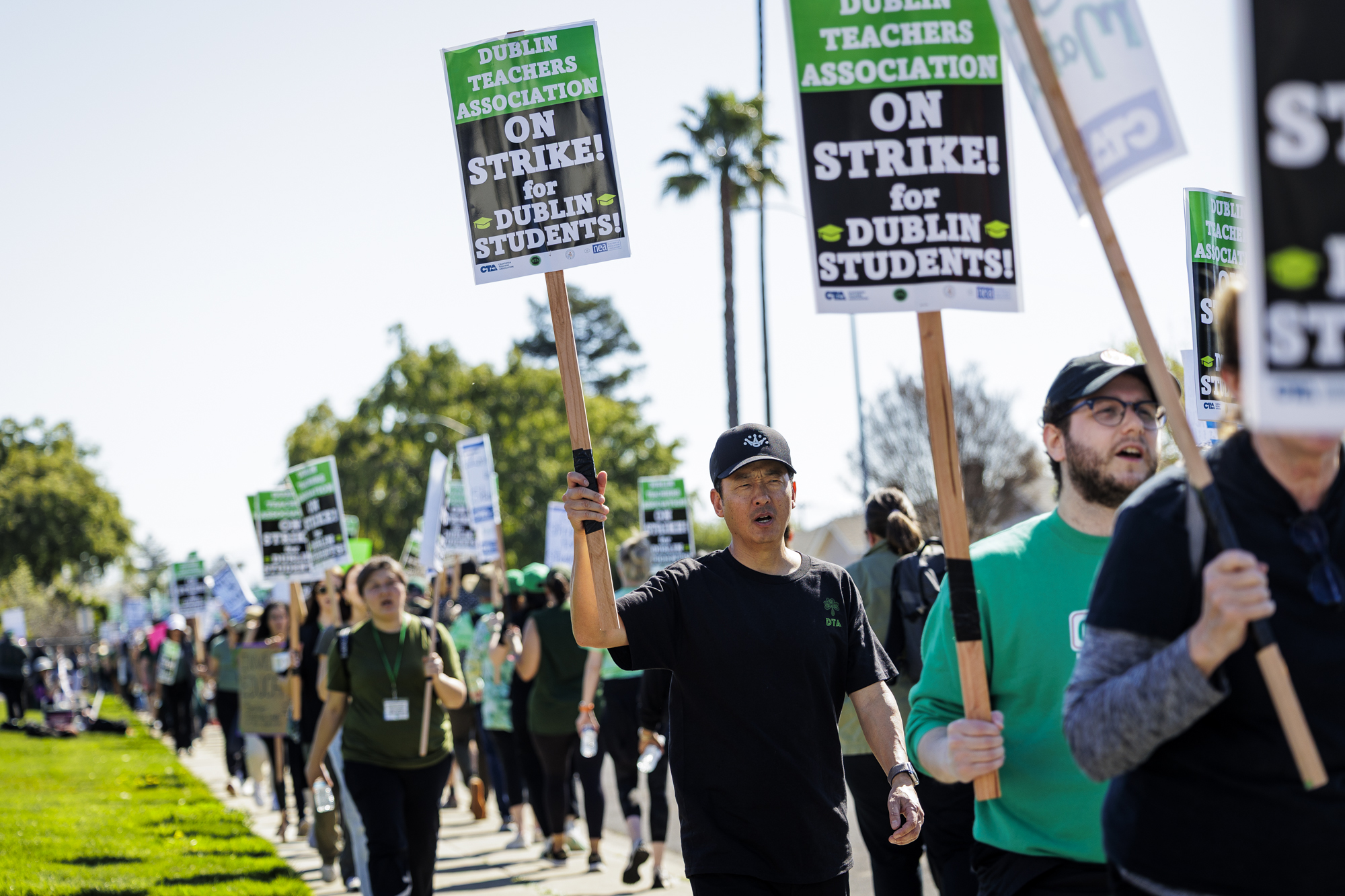
California public schools are experiencing significant labor unrest, with teachers in San Francisco, Oakland, San Diego, Dublin, and Sacramento-area districts striking or voting to strike. The state's education system faces a financial crisis stemming from property tax limitations that make schools dependent on state funding tied to student attendance. With declining enrollment in most districts, state funding cannot keep pace with rising costs. California's high cost of living compounds the problem, as school districts struggle to offer competitive wages and benefits without certainty about future funding. The situation worsened after pandemic relief funds totaling $23.4 billion ended, forcing districts to absorb costs previously covered by temporary grants.
"California limits how much local governments can charge for property taxes. That means the majority of school funding comes from the state. But with declining enrollment in most districts, state funding - which is tied to student attendance - isn't keeping up with costs. This is one of the challenges with education. It is very expensive. You have this kind of ironic dual problem where we're spending a lot of money, but then also it's not enough."
"California is one of the most expensive states to live in. And school district officials are in a tight spot. They have little control over how much state money they get, and are wary of committing to higher wages and benefits without knowing how they'll pay for it."
"California schools received more than $23.4 billion in one-time grants intended to help students recover from pandemic-related learning loss. State and federal authorities advised schools to spend the money on temporary tutors, after-school and summer programs."
#teacher-strikes #school-funding-crisis #california-education #labor-disputes #pandemic-relief-funding
Read at Kqed
Unable to calculate read time
Collection
[
|
...
]