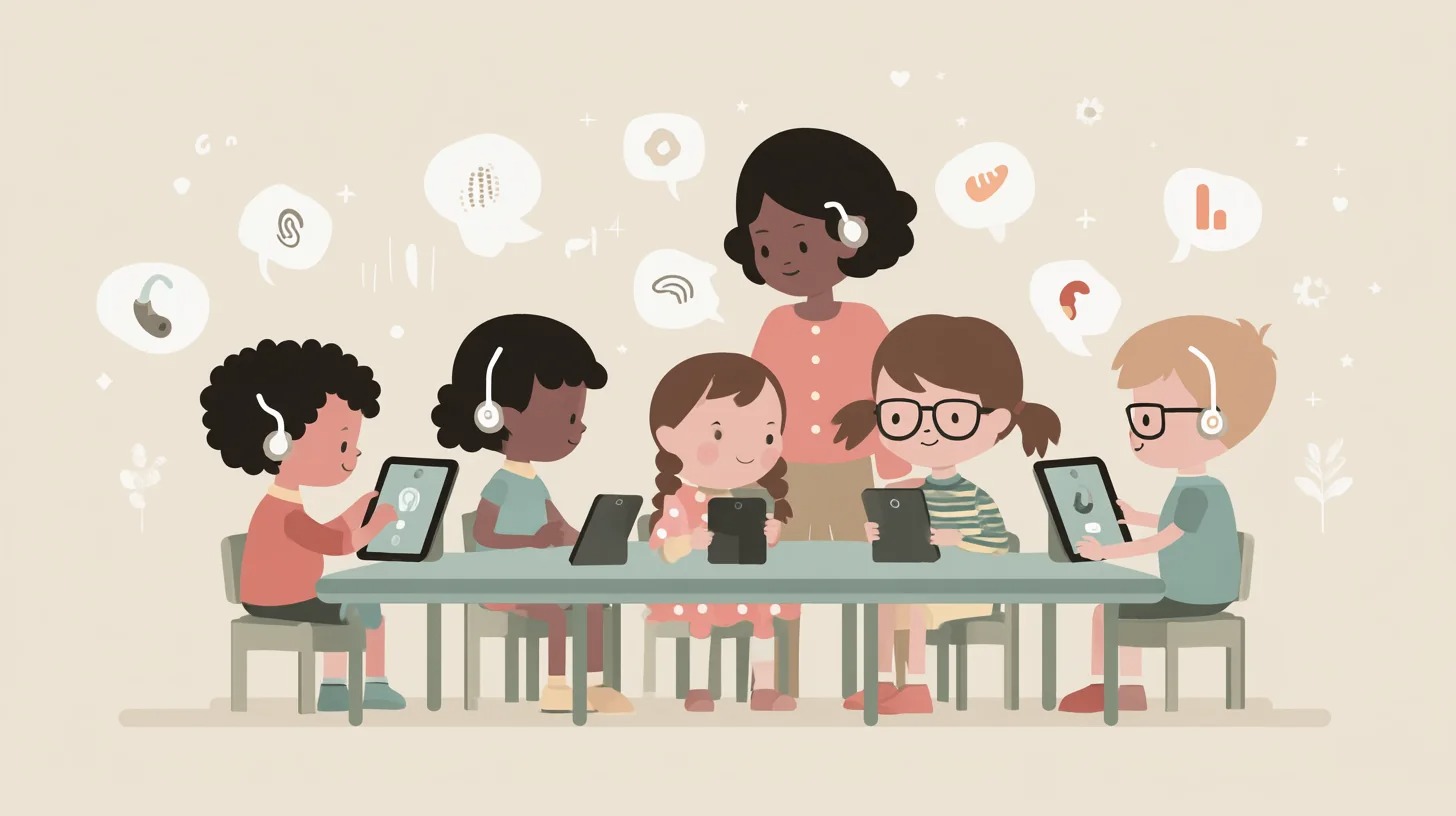
Digital equity in education ensures every student has the same digital resources and opportunities. Inclusive smart classroom technology accommodates diverse learning needs and enables all students, regardless of ability or background, to benefit from technology. Smart boards and assistive tools allow students with disabilities to engage more fully and increase overall engagement and communication. Assistive devices, interactive smart boards, and screen readers enable students with visual, hearing, cognitive, or motor impairments to participate actively. Inclusive designs offer adjustable text sizes and built-in screen readers to support self-paced learning and reduce distractions, driving measurable achievement gains. Schools bridge the digital divide by providing devices and equitable access, while true inclusivity requires effective instructional use.
"Digital equity in education ensures every student has access to the same digital resources and opportunities. Inclusive smart classroom technology embodies this principle by accommodating diverse learning needs. These tools enable all students, regardless of ability or background, to benefit from technology. Smart boards, for instance, can serve as assistive classroom technology, allowing students with disabilities to engage more fully."
"Assistive classroom technology such as adaptive devices, interactive smart boards, and screen readers-enables students with visual, hearing, cognitive, or motor impairments to participate actively. Inclusive designs offer features like adjustable text sizes and built in screen readers, supporting self paced learning for those with attention disorders. As highlighted in a study on accessible and inclusive classrooms by SMART Technologies, these features reduce distractions and drive measurable achievement gains."
"Students from varied backgrounds also benefit from collaboration tools and flexible response options, ensuring all learners can contribute meaningfully, irrespective of learning pace or preference. Many schools are bridging the digital divide by equipping students with personal devices and providing equitable access to digital content. For instance, Keshet schools harness technology to generate inclusive learning by leveraging grants and strategic investments for iPads and adaptive tools."
Read at eLearning
Unable to calculate read time
Collection
[
|
...
]