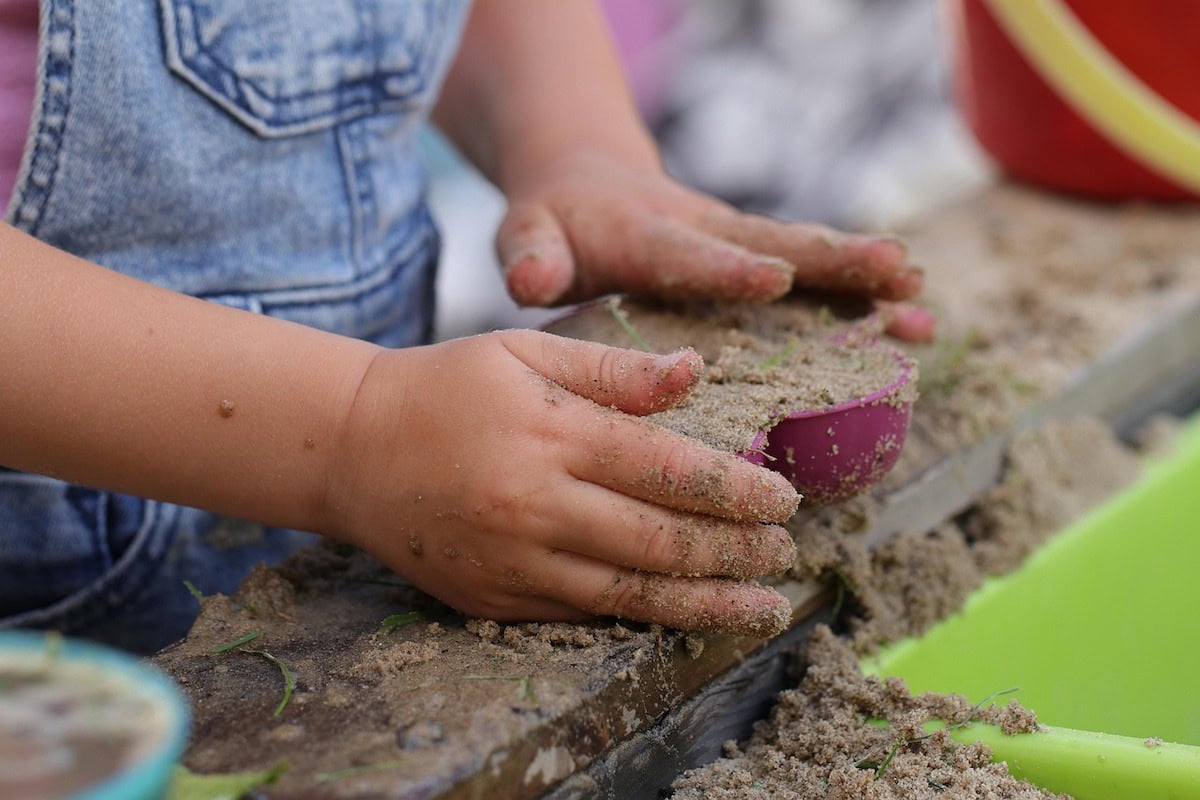
"By definition, sensory play includes any type of hands-on, open-ended play that allows children to explore the world through touch, sound, sight, smell, or movement. This kind of sensory exploration helps support healthy sensory processing, which is often a challenge for children with sensory integration differences. Through structured and unstructured sensory experiences, play encourages self-regulation, attention, and motor development-making it a valuable strategy for therapists, educators, and families alike."
"Engaging in sensory play can be particularly beneficial for children who need extra support processing sensory input. Activities like water sensory bins, textured play dough, and fidget-friendly sensory play materials allow a child to explore at their own pace in a safe, calming environment. These are the best sensory activities for promoting language development, fine motor coordination, and emotional regulation. Sensory play also helps reduce sensory defensiveness by gradually exposing children to new textures and sensations."
"The power of sensory play lies in its adaptability. It meets children exactly where they are, whether they're just beginning to tolerate touch or ready for more complex activities like themed discovery bins. For children with developmental delays, sensory play can support emerging skills in ways that are non-threatening and engaging. Simple ideas for toddlers or activities for young children, like scooping rice or finger painting, help develop coordination, language, and independence."
Sensory play includes hands-on, open-ended activities that engage touch, sound, sight, smell, and movement. Sensory play supports healthy sensory processing and addresses sensory integration differences common among children with special needs. Structured and unstructured sensory experiences promote self-regulation, attention, motor development, language acquisition, fine motor coordination, and emotional regulation. Gradual exposure to varied textures and sensations can reduce sensory defensiveness and increase tolerance. Sensory activities such as water bins, textured play dough, and fidget materials enable exploration at an individual pace within calming settings. Sensory play adapts to developmental levels and offers non-threatening skill-building opportunities for therapists, educators, families, and children.
Read at Daily Mom magazine
Unable to calculate read time
Collection
[
|
...
]