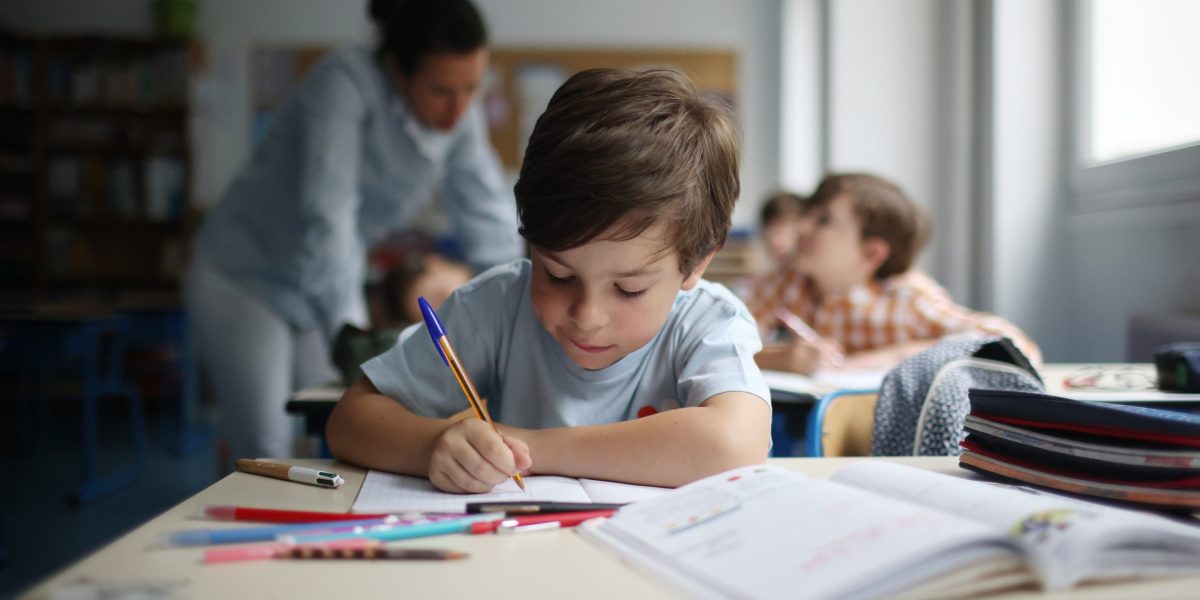
"First and second graders continue to perform worse than their pre-pandemic counterparts on math and reading tests, according to a report published Tuesday by the education assessment and research group NWEA. But while math scores have inched up every year, reading scores remain stagnant, the report shows."
"In the youngest students' failure to recover, 'there's something kind of systemic here happening ... within schools and outside of schools,' said Megan Kuhfeld, a researcher at NWEA. 'We can't pinpoint one specific cause.'"
"The federal government gave billions of dollars to school districts to help students catch up - with mixed results. In 2024, reading scores for fourth- and eighth-graders continued a downward slide, according to the National Assessment of Educational Progress. Math scores, however, trended upward."
Young students who were infants or unborn during COVID-19 now show persistent academic gaps compared to pre-pandemic cohorts. First and second graders score lower on math and reading assessments, with math gradually improving annually while reading performance remains flat. Researchers attribute this underperformance to systemic factors both within and outside schools rather than instructional disruption alone. Kindergarten scores in math and science remained stable throughout the pandemic. Older students show similar struggles, with fourth and eighth grade reading scores declining in 2024 despite upward math trends. Federal funding provided to schools produced mixed results in helping students recover academically.
#pandemic-academic-impact #student-achievement-gaps #reading-and-math-performance #systemic-educational-disruption
Read at Fortune
Unable to calculate read time
Collection
[
|
...
]