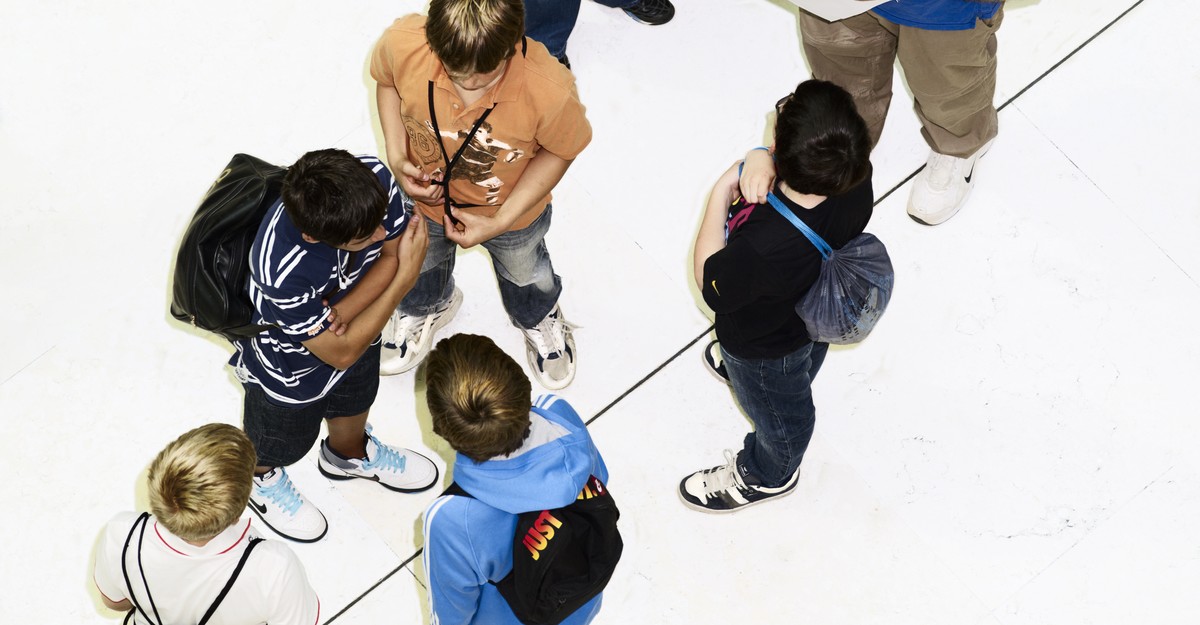
"On a chilly day before Christmas, Teresa Rivas helped a tween boy pick out a new winter coat. "Get the bigger one, the one with the waterproof layer, mijo," she said, before helping him pull it onto his string-bean frame. Rivas provides guidance counseling at Owen Goodnight Middle School in San Marcos, Texas. She talks with students about their goals and helps if they're struggling in class. She's also a trained navigator placed there by a nonprofit called Communities in Schools."
""Between kindergarten and 12th grade, kids spend only 20 percent of their time" in a classroom, Rob Watson, the executive director of the EdRedesign Lab at the Harvard Graduate School of Education, told me. If America wants kids to thrive, he said, it has to consider the 80 percent. Educators and school administrators in San Marcos, a low-income community south of Austin, agreed. "Tests and academics are very important," Joe Mitchell, the principal of Goodnight Middle School, told me. "But they are secondary sometimes, given what these kids' lives are like away from here.""
Community school model places trained navigators and guidance counselors in schools to address students' out-of-school needs. In San Marcos, Texas, navigators help with clothing, benefits enrollment, rent assistance, medical appointments, and essential household needs. The model rests on the premise that students spend only 20 percent of K–12 time in classrooms and that out-of-school conditions strongly influence academic success. An evaluation of more than 16 million Texas students across two decades linked implementation of Communities in Schools to higher test scores, lower truancy, fewer suspensions, and improved high-school outcomes. School leaders report academics can be secondary when students face severe home challenges.
Read at The Atlantic
Unable to calculate read time
Collection
[
|
...
]