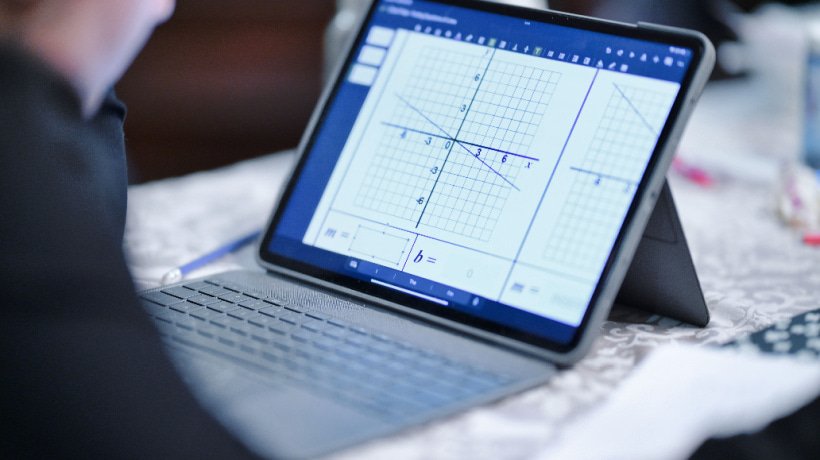
"Assessment is often discussed as the final step in learning, but in practice, it is one of the most cognitively demanding tasks educators perform. Designing a high-quality assessment requires alignment with curriculum standards, appropriate cognitive demand, clarity of language, and the ability to evaluate reasoning, not just final answers. In mathematics, this complexity is amplified. Small changes in numbers, contexts, or phrasing can significantly alter task difficulty."
"In scalable education-whether online, blended, or system-wide-consistency is not a luxury. It is a prerequisite for fairness, trust, and credibility. Teachers often need multiple versions of the same assessment to: Reduce academic dishonesty. Accommodate retakes. Manage scheduling constraints. These versions must be equivalent in difficulty and scope. When they are not, outcomes become difficult to interpret. Students may be assessed on tasks that appear similar but differ substantially in cognitive demand, undermining the reliability of results."
Assessment design demands substantial cognitive work, requiring alignment with standards, appropriate cognitive demand, clear language, and evaluation of reasoning rather than only final answers. Mathematical tasks magnify complexity because small changes to numbers, context, or phrasing can shift difficulty. Assessment creation is commonly an individual teacher responsibility rather than shared infrastructure, unlike curricular materials. Consistency across assessments is essential in scalable systems to preserve fairness, trust, and credibility. Teachers need multiple equivalent versions to deter dishonesty, support retakes, and handle scheduling, and inequivalent versions make outcomes hard to interpret and increase unseen labor.
Read at eLearning Industry
Unable to calculate read time
Collection
[
|
...
]