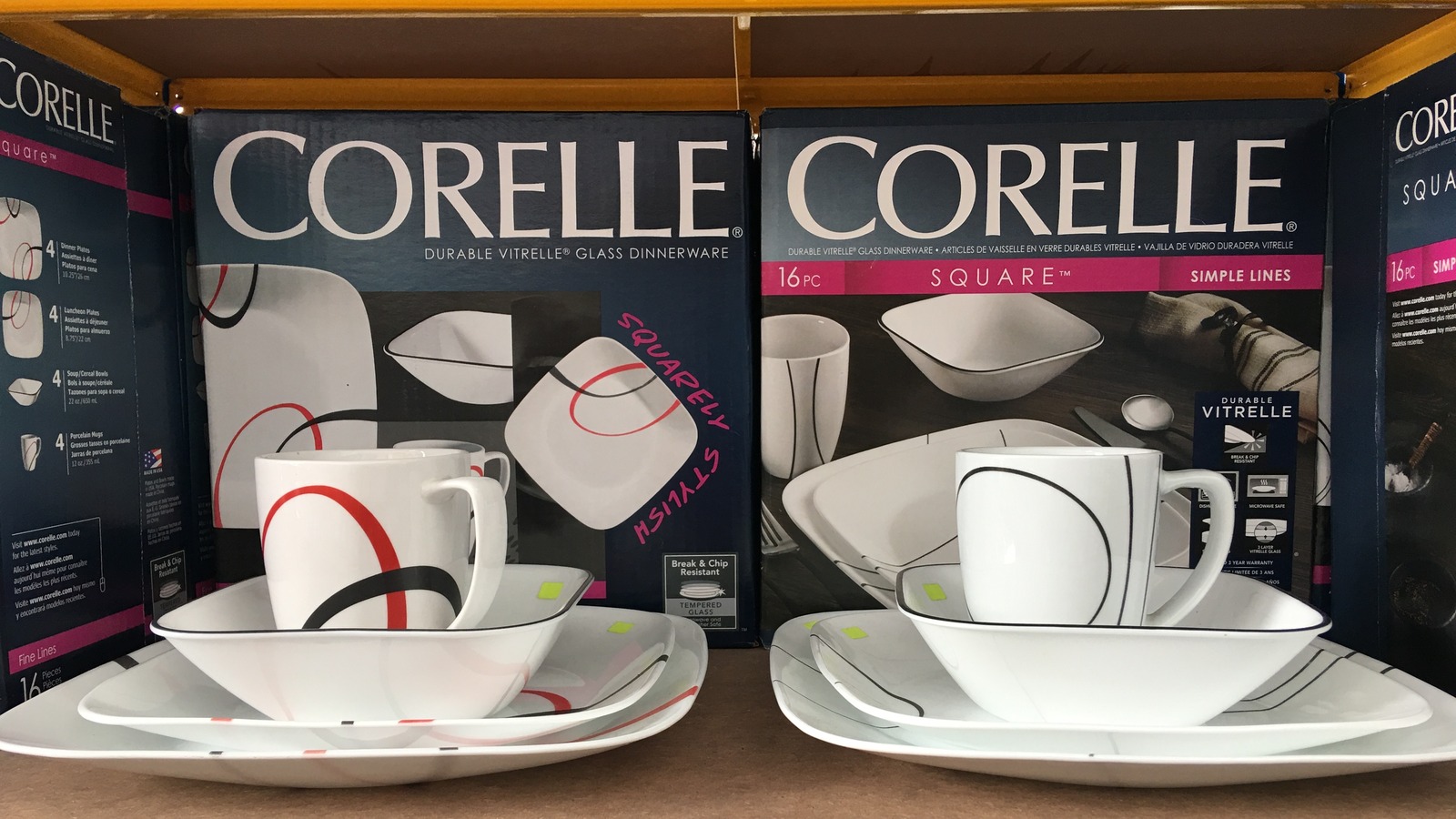
"Upon flipping over the dish, you should notice a Corelle or Corning brand logo. For pieces made prior to 1998, CorningWare will be stamped onto the dish. Experienced Corelle connoisseurs will notice a translucent appearance in dishes that were made in the 1970s, and the dishes ding, similar to a piece of fine China, when thumped with a fingertip. To determine whether the bowl in your hands can be authenticated, look at the pattern along the edge of the bowl."
"True Corelle designs won't vanish with temperature fluctuations or wear. Next, look at the price of the item you're looking to purchase. While vintage Pyrex dishes can sell for a few hundred dollars, Corelle's cute patterns are typically more affordable to grab. Most of Corelle's dishes are sold anywhere from $20 to $100, and you can snag full sets for around $60."
Corelle dinnerware, introduced by Corning Glass Works in the late 1960s, is made from Vitrelle, a lightweight, durable glass laminate resistant to cracking. Designs commonly feature florals and geometric printed rings around edges on cups and plates. Authentic pieces display Corelle or Corning brand logos; pieces made before 1998 are stamped CorningWare. Dishes from the 1970s can appear translucent and produce a ding when tapped. Genuine patterns resist fading from temperature changes or wear. Pricing usually ranges from $20 to $100, with full sets around $60, while rarer vintage patterns command higher prices.
Read at Tasting Table
Unable to calculate read time
Collection
[
|
...
]