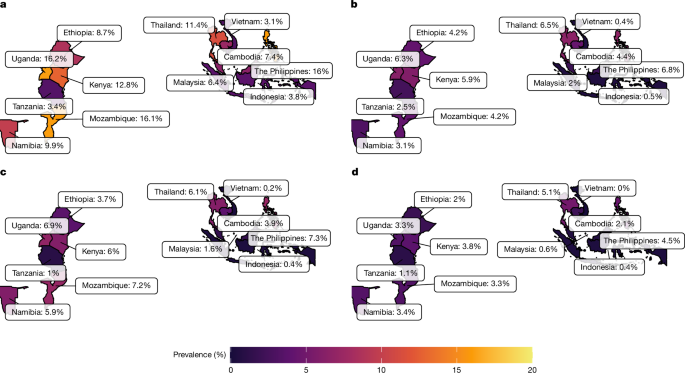
Rapid digitization is increasing research on children’s online safety, but the effects of greater digital connectivity in low- and middle-income countries are often overlooked. This is especially urgent in Africa and Asia, where large proportions of the population are young and social media use is widespread. Technology-facilitated child sexual exploitation and abuse includes solicitation and sharing of child sexual abuse material, online grooming, live-streamed sexual abuse, and sexual extortion. The true scale of these harms in most LMICs remains unclear despite efforts by law enforcement, UN organizations, civil society, and governments. Prevention and response require reliable data on prevalence, causes, and protection system effectiveness, but collecting such data is extremely difficult due to ethical, sociocultural, safeguarding constraints and complex legal differences.
"Rapid digitization is driving increasing research on the online safety of children worldwide1, yet the impact of increasing digital connectivity in low- and middle-income countries (LMICs) has been routinely overlooked2,3. This gap is particularly important for Africa, where over 60% of citizens are aged under 25 years and the population is projected to double by 20504, and for Asia, home to the majority of the world's children and social media users2,3. While many initiatives across both regions have focused on digital inclusion to benefit children's education5, understanding how widening internet access affects children's exposure to online harms has become increasingly urgent."
"Among the most concerning of these harms is the use of digital technologies to perpetrate sexual violence against children, encompassing solicitation and dissemination of child sexual abuse material (images and videos), online grooming, live-streamed sexual abuse and sexual extortion8. These issues were highlighted in the 2024 US Senate Judiciary Committee9 hearing, which sought to hold popular social media companies to account for child safety issues on their platforms. Despite the efforts of multiple law enforcement authorities, UN organizations10, civil society organizations11 and national governments12, the true extent of technology-facilitated CSEA remains unclear for most LMICs, where children may face heightened risks of sexual violence13."
"Effective prevention and response strategies require data-driven insights into the prevalence, root causes and effectiveness of protection systems. However, obtaining reliable data on child sexual abuse is extremely difficult. Ethical, sociocultural and safeguarding constraints limit what can be asked, how it should be asked and of whom it can be asked14. The varied international legal landscape further complica"
#online-child-safety #child-sexual-exploitation-and-abuse #digital-inclusion #low--and-middle-income-countries #social-media-risks
Read at Nature
Unable to calculate read time
Collection
[
|
...
]