"Netflix has improved Apache Druid query efficiency by introducing an interval-aware caching strategy that serves approximately 84 percent of analytics results from cache and reduces query load by about 33 percent. The optimization targets rolling window dashboards, where continuously refreshing queries with slightly shifting time ranges traditionally lead to redundant computation and repeated scans over large datasets."
"At Netflix scale, real-time analytics systems process trillions of rows to power dashboards used for monitoring, experimentation, and operational decision making. These dashboards frequently execute near-identical queries, such as error rates or engagement metrics, over sliding time windows. While the intent of each query remains the same, minor shifts in time boundaries cause traditional caching systems to treat them as distinct requests, resulting in low cache reuse and repeated computation in Apache Druid."
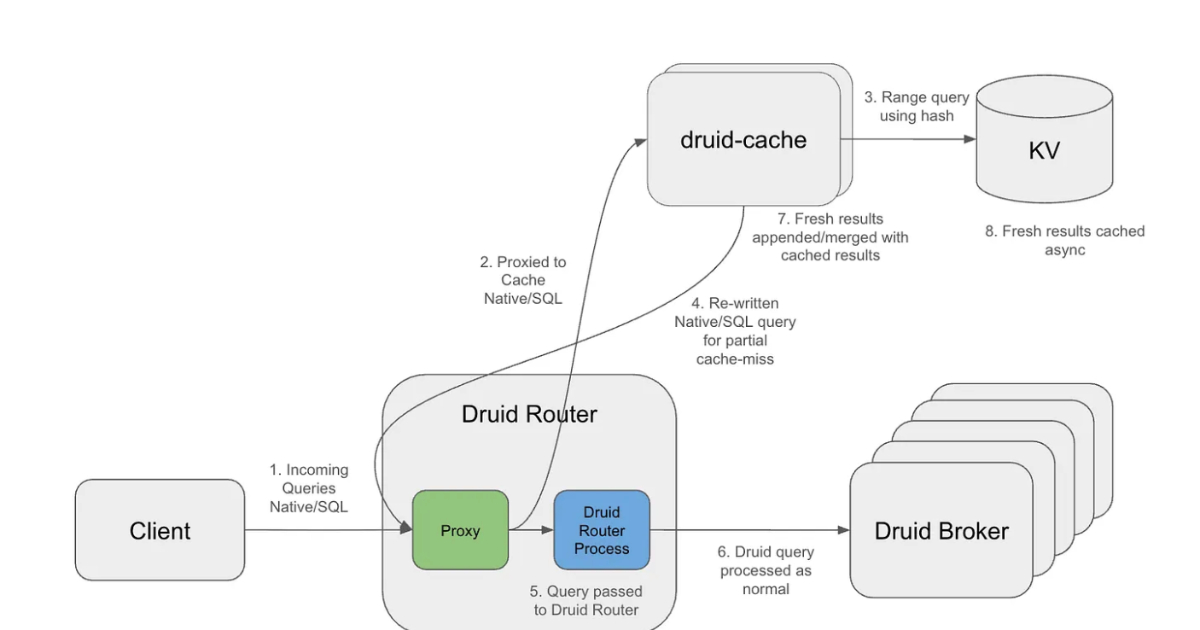
"Netflix's approach decomposes query results into time-aligned segments to enable reuse across overlapping rolling window queries. Instead of caching full query outputs, the system stores intermediate aggregates for fixed time intervals. When a new query arrives, cached segments are reused for stable historical portions of the time window, while only the most recent interval is recomputed from Druid and merged with cached results."
"A 33% drop in queries to Druid and a 66% improvement in P90 query times"
Netflix improved Apache Druid query efficiency with an interval-aware caching strategy. Rolling window dashboards repeatedly run near-identical analytics queries with slightly shifting time ranges, causing traditional caching to treat them as distinct requests and repeat computation and scans. The approach decomposes query results into time-aligned segments and caches intermediate aggregates for fixed intervals rather than full outputs. For a new query, stable historical intervals are reused from cache, while only the newest interval is recomputed from Druid and merged with cached aggregates. This yields about 84% of analytics results served from cache and about a 33% reduction in query load, with improved P90 query times.
Read at InfoQ
Unable to calculate read time
Collection
[
|
...
]