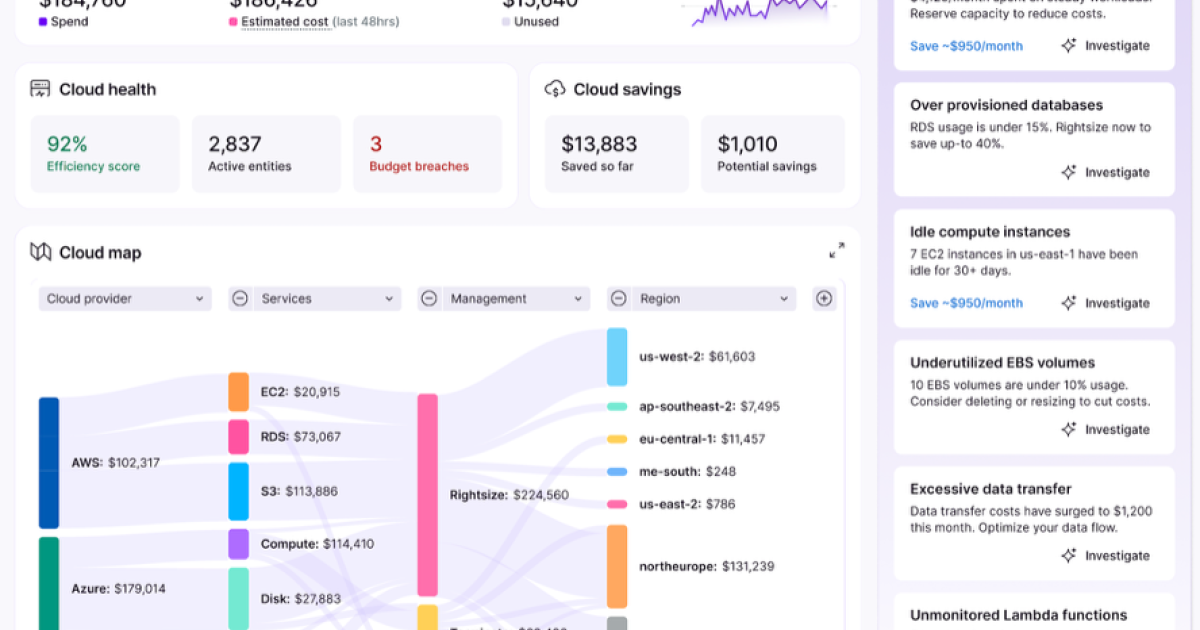
Granular financial visibility created a shared language between engineering and finance, allowing engineers to evaluate work by financial footprint and finance to link budget variance to technical events. Real-time monitoring enabled immediate correlation of costs and technical activity, but the primary value came from shifting cost consciousness upstream into development. Cost impact forecasting became a standard pre-deployment step, using correlated cost telemetry to estimate resource and dollar effects of changes. DevOps teams iteratively tested implementations, used traces to find expensive patterns like high-latency queries or excessive logging, and compared cost-to-performance ratios to find optimized configurations.
"Once we had our financial lens, we naturally moved our focus from analyzing past spending to preventing future waste. The entire FinOps movement is about shifting cost left, meaning we embed cost-efficiency into the development lifecycle itself. This shift was easy to adopt because our engineers inherently understand that the best product must also be a financially optimized product. Our optimizations focused on two main practices:"
"We conduct cost impact forecasting before key deployments to understand the financial ripple effects of each change and new features and Product launches. This is now a standard step for all major feature development. Teams use correlated cost telemetry to see what a change will actually cost in terms of resources and dollars. This visibility creates a quick feedback loop, pushing teams to find the financially optimized configurations that still meets performance requirements."
Read at New Relic
Unable to calculate read time
Collection
[
|
...
]