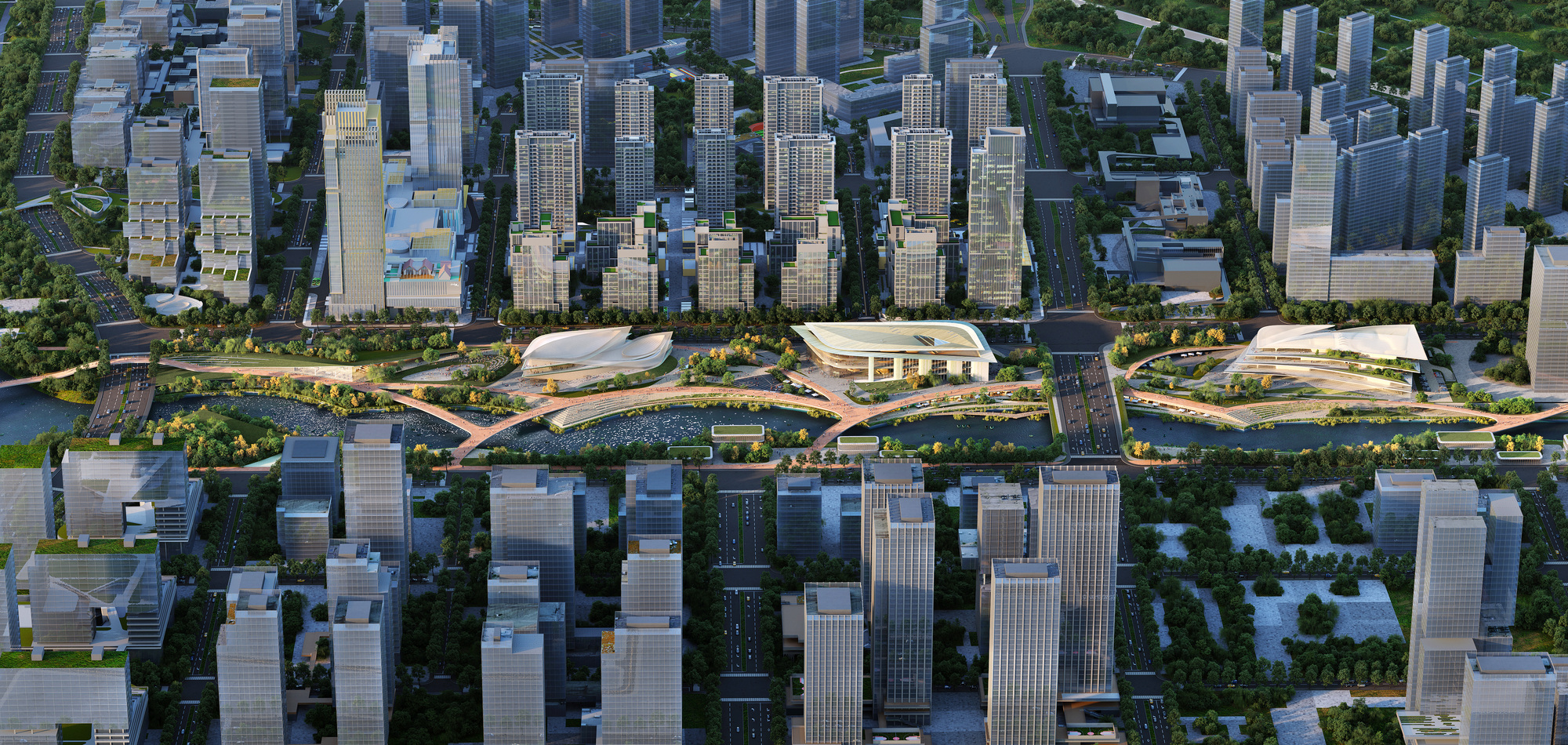
"The proposal adds to other recent design initiatives in the area, including Snøhetta's Qiantang Bay Art Museum, planned at the confluence of the Qiantang River and the Central Water Axis, as well as Zaha Hadid Architects' Grand Canal Gateway Bridge, a pedestrian bridge intended to connect the firm's 800,000-square-meter Seamless City masterplan on the east and west banks of the Grand Canal."
"The Central Water Axis proposal outlines new waterside landscapes alongside cultural and educational buildings arranged along the canal. These structures are oriented to engage with proposed civic spaces, including plazas, promenades, and performance areas designed for recreation, relaxation, and public gatherings. Together, these elements would form a new district defined by public landmarks connected through a network of bridges and pathways linking both sides of the canal."
Zaha Hadid Architects proposes the Qiantang Bay Central Water Axis as a landscaped waterfront corridor converting former industrial zones along the Zhedong Canal into parklands, terraces, and gardens that extend toward Hangzhou’s center. The plan situates cultural and educational buildings beside plazas, promenades, and performance areas linked by bridges and pathways to create a new civic district. Two sculptural cultural buildings respond to terrain and views, while a library uses inhabitable architectural columns to organize collections and spaces. The landscape integrates sponge-city measures—permeable paving, planted swales, and water-retention features—to manage stormwater and reduce flood risk.
#waterfront-redevelopment #sponge-city-infrastructure #cultural-district #landscape-and-public-realm
Read at ArchDaily
Unable to calculate read time
Collection
[
|
...
]