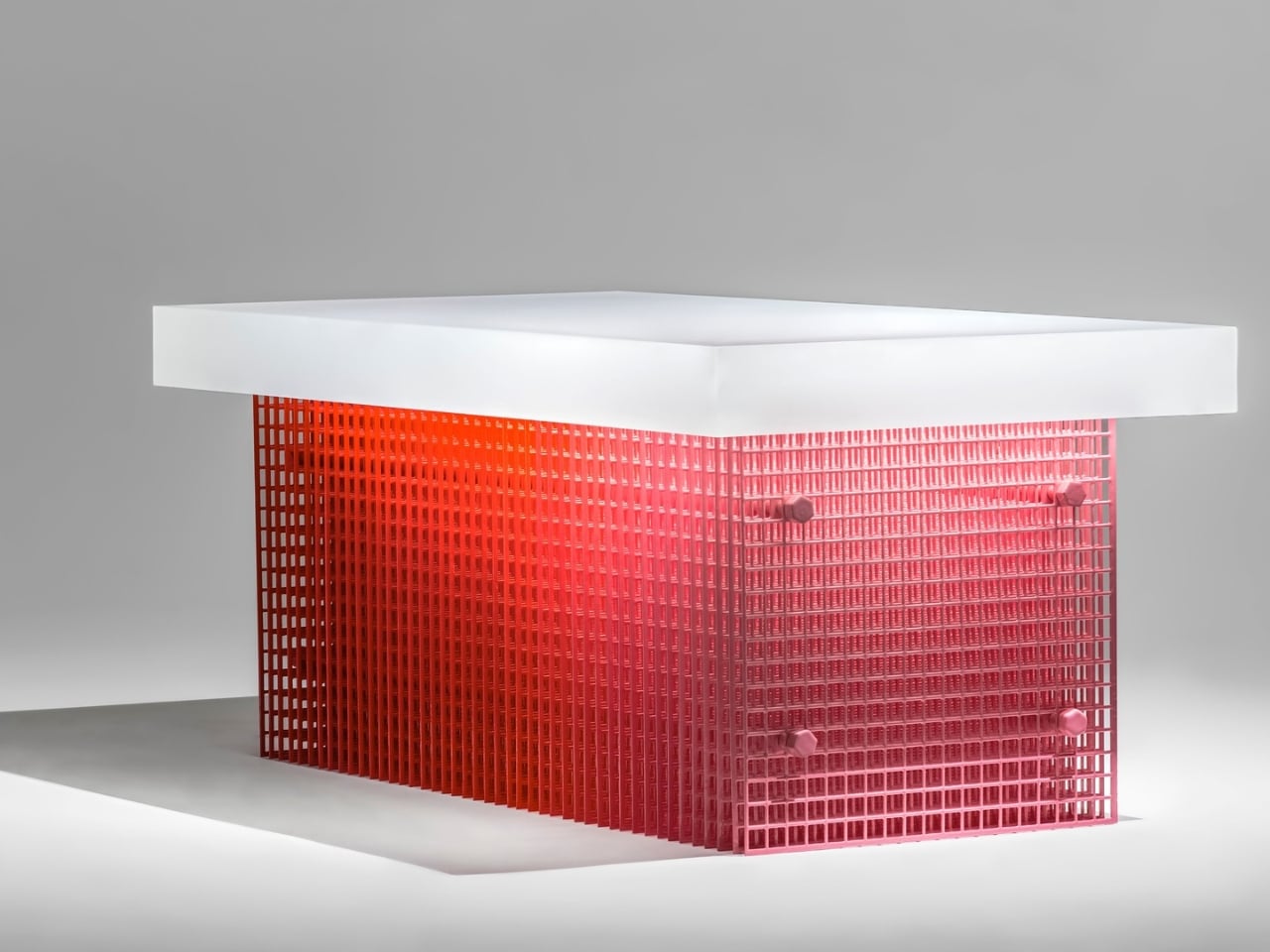
"There's something quietly revolutionary happening when a designer teams up with traditional artisans to create furniture that looks like it exists in two realities at once. Dhruv Agarwwal's Blur Coffee Table is exactly that kind of beautiful paradox. Picture this: a coffee table that appears to shift and shimmer depending on where you're standing. Not through fancy electronics or LED tricks, but through the marriage of precise steel mesh and centuries-old Meena enamel techniques."
"The story behind Blur is rooted in Moradabad, a city in India known for its metalwork heritage. Agarwwal didn't just commission artisans to execute his vision. He collaborated with Meena craftspeople for months, experimenting and problem-solving together to develop a thicker coat of enamel that could interact with steel mesh in completely new ways. This wasn't about slapping traditional techniques onto modern forms. It was about pushing both the craft and the material into uncharted territory."
"What makes this table so visually arresting is the tension between precision and imperfection. The steel mesh is cut with exacting accuracy, creating a consistent, geometric foundation. But the hand-applied enamel? That's where the magic happens. Each brushstroke, each slight variation in thickness creates zones where colors appear to float, disappear, and reappear. The technical precision becomes the canvas for human imperfection, and together they create something that feels alive."
Dhruv Agarwwal's Blur Coffee Table combines precise steel mesh with centuries-old Meena enamel to create a surface that shifts visually as the viewer moves. The piece was developed through months of collaboration with Meena artisans in Moradabad, refining a thicker enamel coat that interacts with the mesh. The design balances machine-like geometric precision and hand-applied enamel variations so brushstrokes and thickness differences cause colors to float, vanish, and reappear. The technical precision acts as a canvas for human imperfection, producing a living, shifting object that resists mass-produced uniformity without invoking nostalgia.
Read at Yanko Design - Modern Industrial Design News
Unable to calculate read time
Collection
[
|
...
]