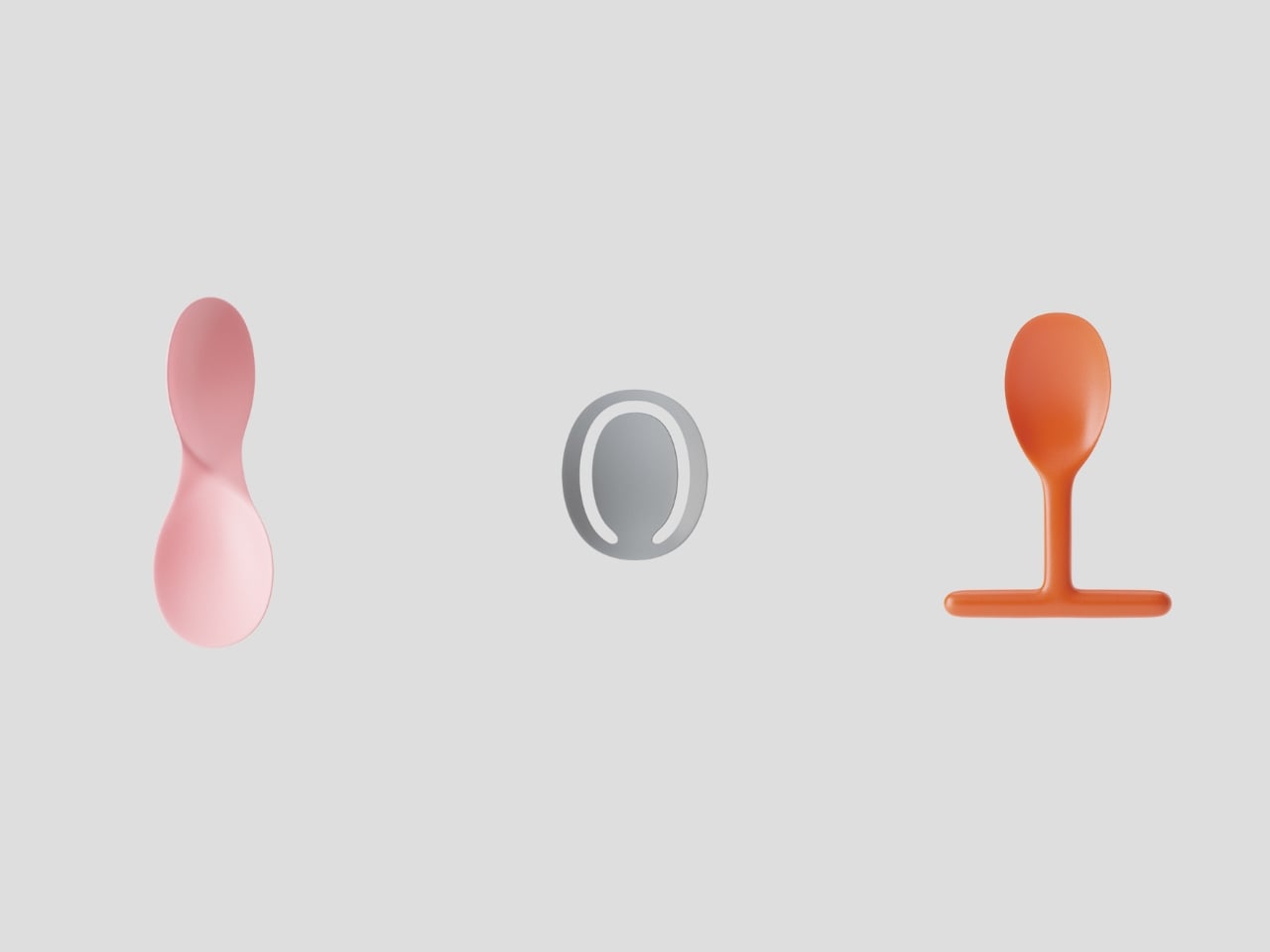
"We use spoons dozens of times a day without giving them a second thought. They're just there, scooping soup, stirring coffee, delivering cereal to our mouths with mechanical reliability. But BKID co asked a question that sounds almost absurd at first: what if spoons were alive? What if they could evolve like living organisms, adapting to their environment through the same forces that shaped every creature on Earth?"
"BKID co applied four key principles of Darwinian evolution to answer these questions. Recombination, where traits from different "parent" spoons merge to create hybrid offspring. Mutation, introducing random variations that might prove useful or utterly bizarre. Natural selection, where the most functional forms survive while impractical ones fade away. And the handicap principle, the counterintuitive idea that sometimes a costly trait signals quality, like a peacock's unwieldy tail."
"What emerges from this framework is a collection of spoons that look like they belong in a natural history museum of an alternate universe. There's one with a spiraling corkscrew handle, as if it adapted to stir thick liquids with maximum efficiency. Another splits into a tulip shape at the bowl, perhaps "evolving" to let multiple people eat from the same dish. A green spoon sprouts a small branch from its handle, like it"
Spoons occupy a constantly changing ecosystem of human behavior, with diets, dining styles, and household compositions shifting over time. Imagining spoons as living organisms allows evolutionary forces to reshape their forms to match those pressures. BKID co applied four Darwinian principles: recombination of traits, mutation introducing random variations, natural selection favoring functional designs, and the handicap principle where costly traits can signal quality. The resulting spoon forms include a spiraling corkscrew handle for stirring thick liquids, a tulip-shaped bowl that splits to enable shared eating, and a green spoon that sprouts a branch-like handle. The project blends design experiment and philosophical exploration of adaptation and function.
Read at Yanko Design - Modern Industrial Design News
Unable to calculate read time
Collection
[
|
...
]