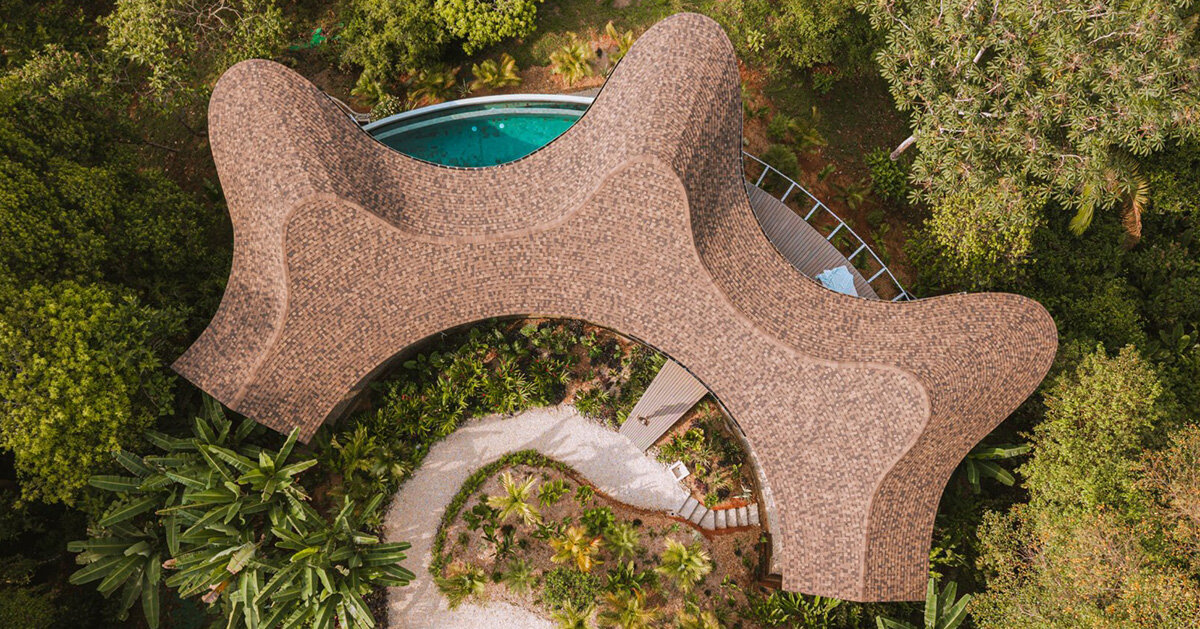
"Perched on a secluded mountainside in Bahía Ballena, Costa Rica, Ojo de Nila is a private residence by Studio Saxe, led by Benjamin Saxe, that explores what it means to live fully outdoors in a tropical climate. Designed for a Swiss couple seeking a deeper relationship with their surroundings, the 300-square-meter home opens toward the Pacific Ocean, relying on natural ventilation."
"The most defining element of Ojo de Nila is its organic roofscape. Moving in soft waves, the roof echoes the surrounding topography while providing shade and directing airflow through the house. Its sinuous profile replaces a conventional pitched form with a continuous gesture that unifies the different living areas beneath it. Constructed from welded metal structures and finished with brown shingles, the roof reads as an extension of the landscape."
"Set within the biodiverse landscape of Costa Rica's Osa region, the home responds directly to its site. The architects at Studio Saxe follow the natural contours of the land through a repetitive structural module that allows the building to hover above the terrain. This elevated stance preserves existing water flows and vegetation while positioning the living spaces among the treetops, where ocean breezes and shifting daylight define everyday life."
Ojo de Nila is a 300-square-meter private residence perched on a secluded mountainside in Bahía Ballena, Costa Rica, designed to enable living fully outdoors in a tropical climate. The house opens toward the Pacific Ocean and relies on natural ventilation. Its most defining element is an organic, undulating roofscape made from welded metal structures and brown shingles that echoes surrounding topography, provides shade, and directs airflow. The building follows natural land contours through a repetitive structural module, allowing it to hover above terrain to preserve water flows and vegetation. Primary spaces face the ocean with omitted windows and doors, keeping interiors cooled by sea breezes and mountain air, integrating shifting light, wind, and sound into daily life.
Read at designboom | architecture & design magazine
Unable to calculate read time
Collection
[
|
...
]