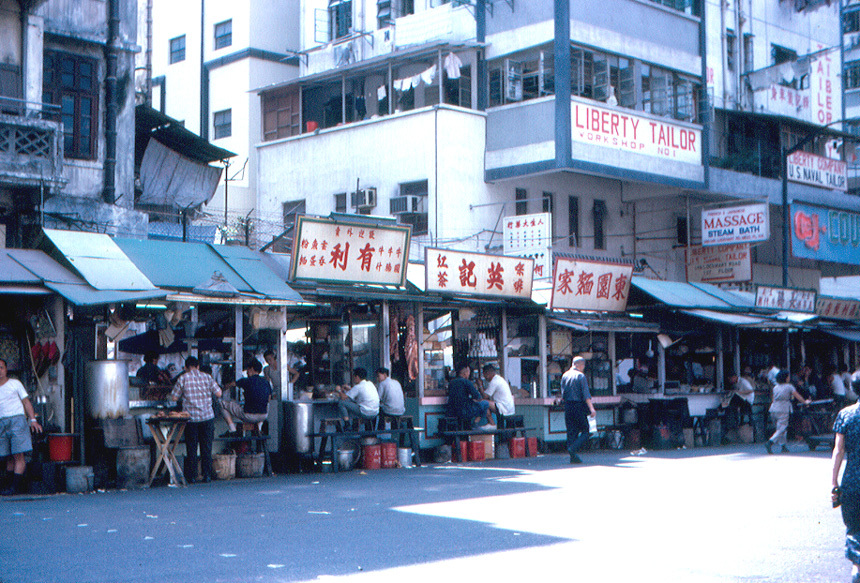
"Across cities worldwide, architecture unfolds continuously at the scale of people and community-not only through new buildings, renovations, or monumental works. "Third spaces" are especially revealing. Consider the street-side culinary realm: how seating, serving, and lingering occupy the edge of the street often discloses a city's cultural codes and spatial habits. What forms of dining and inhabitation have emerged in response to local climate, regulation, and social custom -and how have they evolved over time?"
"Hong Kong offers a parallel yet distinct tradition: the Dai Pai Dong. Literally "big license plate stall," the term comes from the oversized government licenses historically issued-often to families of civil servants killed or injured during the Second World War-to legitimize small food businesses. From this lineage grew an improvised, street-front dining culture that has long stitched together everyday social life."
Architecture operates at the human and community scale through everyday urban practices and third spaces. Street-edge dining demonstrates how seating, serving, and lingering negotiate public space and reveal local cultural codes. Dining forms respond to climate, regulation, and social custom and transform over time. Al fresco in Italy and en terrasse in France integrate meals with weather, air, and passive sociability. New York City expanded outdoor dining after COVID-19 as a community-driven use of the streetscape. Hong Kong’s Dai Pai Dong originated from oversized licenses and evolved into an improvised street-front dining culture that fosters togetherness while adapting to regulatory pressures.
Read at ArchDaily
Unable to calculate read time
Collection
[
|
...
]