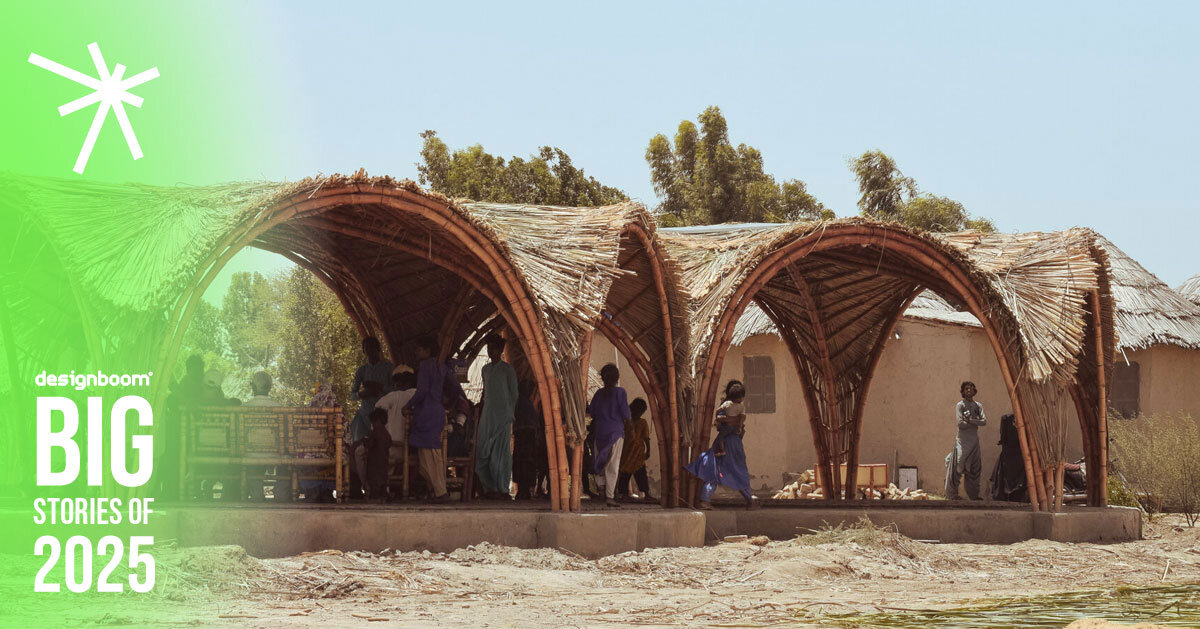
"As 2025 comes to an end, we're reflecting on the architecture, design, and technology projects featured on designboom that applied creative thinking to address compounding global pressures. Designers increasingly turned their attention to urgent realities, such as intensifying climate-driven disasters and growing resource scarcity. In a year marked by record-breaking temperatures, ongoing displacement crises, and growing debates around waste, water, and energy systems, design emerged not as a passive backdrop but as an active tool for response."
"Shaped by these shared challenges, these works demonstrate how design can move beyond aesthetics to function as infrastructure, service, and social support. Together, the 2025 social impact stories highlighted here point to a growing emphasis on design as a practical response to global issues, showing how spatial thinking, material innovation, sustainability, and community engagement can contribute to more equitable and resilient futures."
"From flood-proof bamboo pavilion within Yasmeen Lari's zero-carbon Pono village in Pakistan, and Natura Futura's teak wood bakery, conceived as a hybrid infrastructure led by women and youth, to Toyota's autonomous wheelchair with foldable tentacle legs that can climb stairs, and Ulf Mejergren's compact gabled refuge that mounts on a mobile scissor lift to adapt to environments with frequent rainfall and flooding, here are the top 10 social impact stories that addressed pressing social, environmental, and cultural challenges."
2025 projects applied design, architecture, and technology to urgent global pressures such as intensifying climate-driven disasters, resource scarcity, and displacement. Examples include a compact gabled timber Lift House mounted on a mobile scissor lift for flood-prone settings, a flood-proof bamboo pavilion within Yasmeen Lari's zero-carbon Pono village in Pakistan, Natura Futura's teak wood bakery conceived as a hybrid infrastructure led by women and youth, and Toyota's autonomous wheelchair with foldable tentacle legs capable of climbing stairs. The works emphasize design functioning as infrastructure, service, and social support through spatial thinking, material innovation, sustainability, and community engagement to build more equitable, resilient futures.
#climate-adaptation #social-impact-design #resilient-architecture #material-innovation #inclusive-mobility
Read at designboom | architecture & design magazine
Unable to calculate read time
Collection
[
|
...
]