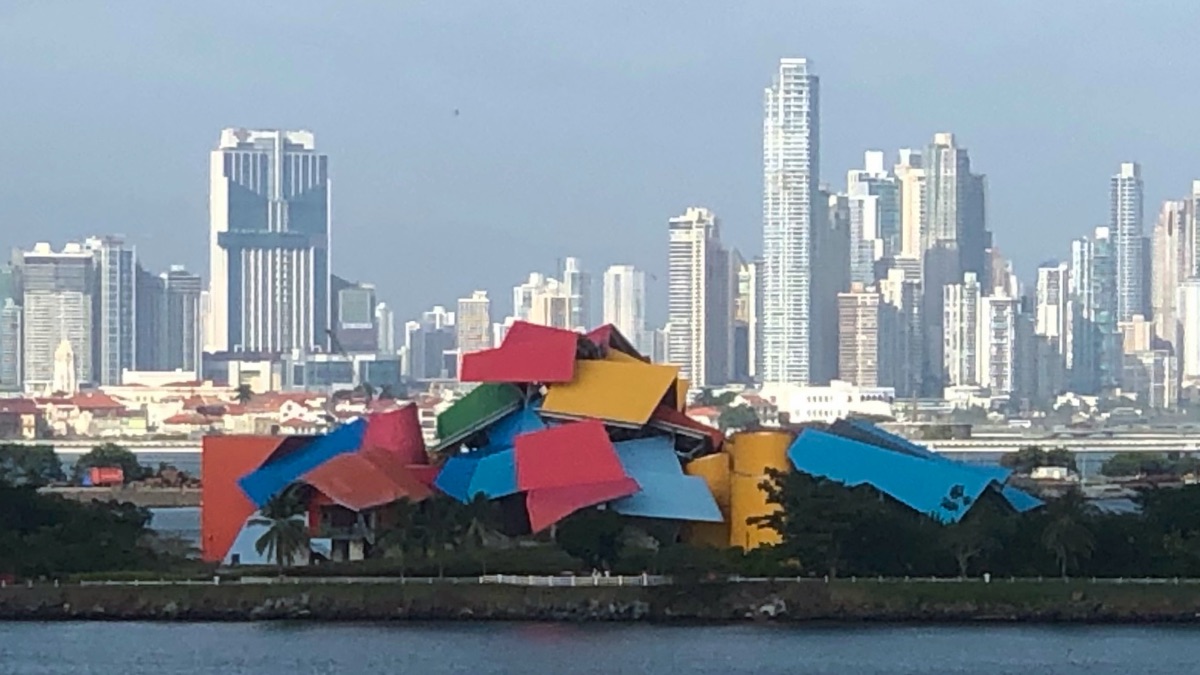
"Frank Gehry died yesterday, so I thought it timely to outline three lessons I learned from his work. Before I get into it, a bit of personal context. I did some early web design for Biomuseo, the only Gehry building in Latin America, and briefly met the man himself when he gave a presentation in Panama. But his influence on me goes back further, to when I was an architecture student."
"Until then, chainlink and corrugated steel were not "respectable" building materials. His Santa Monica home was a middle finger confidently hoisted at his suburban neighbors: one hated the house so much he had his dog poop on its yard. Gehry called his approach a "cheapskate aesthetic" - an opportunistic punk rock architecture inspired by the work of artists like Robert Rauschenberg. Gehry would move on from cheap materials as his star rose, eventually becoming known for buildings clad in titanium."
Gehry created the Biomuseo in Panama, his only building in Latin America. Gehry rose to wider recognition in the late 1980s after two decades of relative obscurity. Early projects employed unconventional materials such as chainlink and corrugated steel, an approach he called a "cheapskate aesthetic" inspired by artists like Robert Rauschenberg. The Santa Monica house provoked strong neighbor reactions. As his profile grew he used high-end materials like titanium cladding. Experimental material choices broadened the acceptable materials axis in architecture and showed that quality need not be expensive. Later adoption of digital design tools expanded formal and technical possibilities.
Read at Jorge Arango
Unable to calculate read time
Collection
[
|
...
]