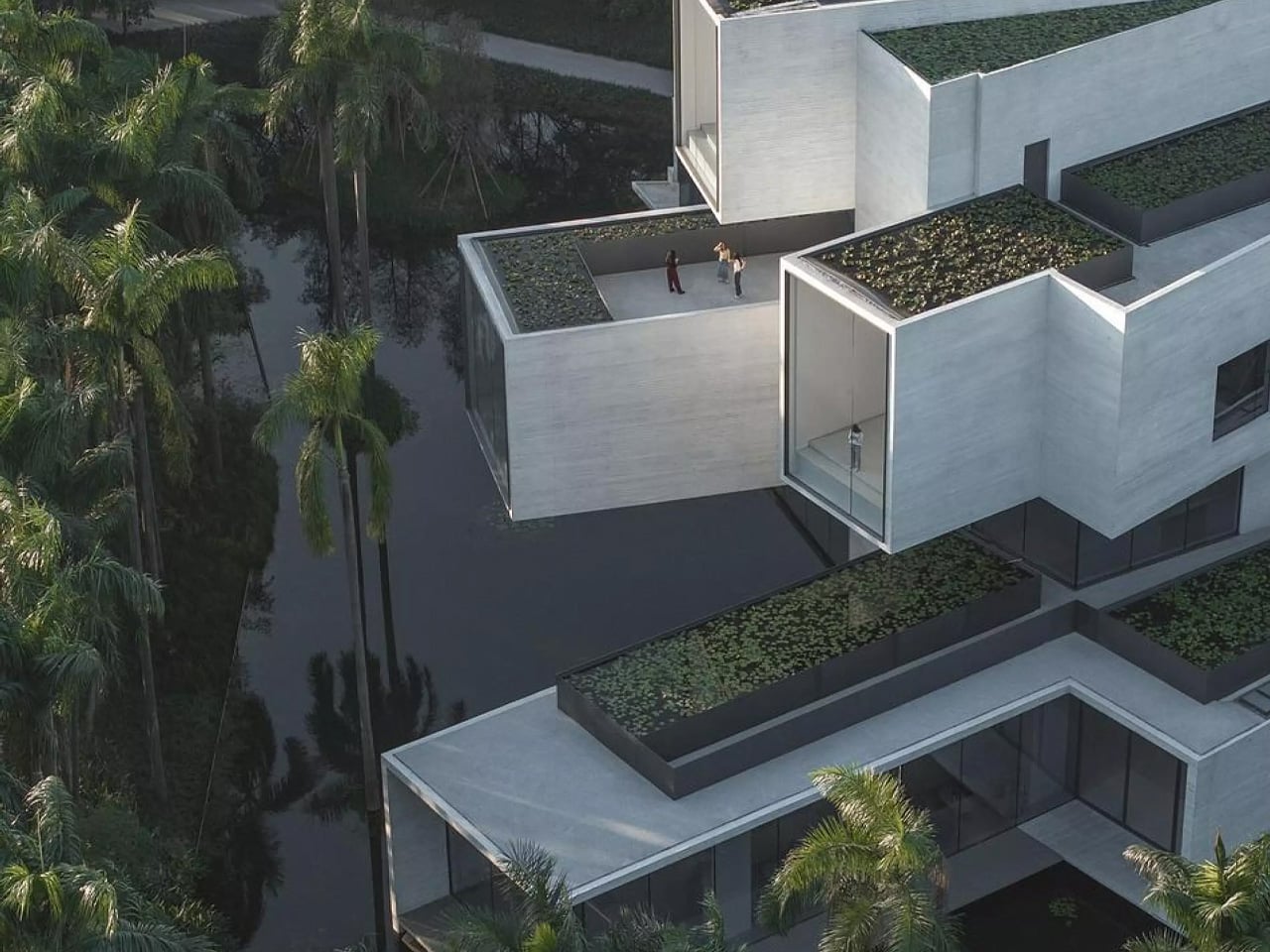
"Nestled within the lush landscape of Yunlu Wetland Park in China's Pearl River Delta, Studio Link-Arc's latest project redefines what it means to design for wildlife. The Shunde Yunlu Wetland Museum sits quietly behind a row of cedar trees, deliberately concealing itself from view. This isn't a building seeking attention. It's architecture that understands its place in an ecosystem where 25,000 egrets take center stage."
"The design challenges conventional architectural thinking. Where most museums position themselves as cultural landmarks, this one retreats. The New York-based firm conceived the structure as four concrete tubes stacked vertically, each rotated to frame a different layer of the forest. The first floor gazes at tree roots. The second captures trunks. The third finds the crowns. The fourth reaches the treetops. Each level acts as a rotating lens, offering visitors perspectives that mirror the egrets' own experience of their habitat."
"This rotation creates something beyond visual interest. The cantilevered volumes give the building a sense of kinetic energy, as though the structure itself is adjusting to follow the birds' movements across the water. The stepped form settles into the wetland's natural density, absorbed by tall vegetation and reflective water surfaces that blur the boundary between built and natural environments. Each tube functions as a box structure, with sidewalls, roofs, and floors working together to support these dramatic projections."
The Shunde Yunlu Wetland Museum sits concealed behind a row of cedar trees within Yunlu Wetland Park in the Pearl River Delta. The design comprises four vertically stacked concrete tubes, each rotated to frame a specific forest layer: roots, trunks, crowns, and treetops. Cantilevered volumes produce kinetic energy and allow the building to sit within tall vegetation and reflective water, blurring boundaries between built and natural environments. Each tube functions as a box structure with integrated sidewalls, roofs, and floors to support projections. A triangular atrium connects all floors, channeling softened skylight through deep concrete beams and enabling simultaneous views through multiple tubes.
#wetland-conservation #wildlife-focused-architecture #stacked-rotated-tubes #cantilevered-concrete-design
Read at Yanko Design - Modern Industrial Design News
Unable to calculate read time
Collection
[
|
...
]